liveBook · Manning

Use case

As explained in The Art of AI Product Development

A use case is a defined situation describing how a person or organization applies a system to accomplish a goal.

A use case defines how a person or organization applies a system to accomplish a goal. For AI products, it should address a real customer need and describe a task where AI can create measurable impact through augmentation or automation. section 2.0 section 10.4

Shape a use case by checking:

  • Whether the task reflects an actual user need rather than an attempt to add AI for its own sake. section 2.0
  • What business impact it could produce, how technically feasible it is, and whether it fits company strategy, goals, and skills. section 2.0
  • How users will respond to probabilistic outputs, failures, uncertainty, and opportunities to modify or reject results. section 10.4
  • How evaluation metrics, real-world performance data, edge cases, and user feedback will reveal whether the use case works. section 8.3 section 10.4

A chatbot without a job

A chatbot built without a clear use case can frustrate users instead of improving service. A stronger definition identifies the user task, the intended value, and the measurable effect before selecting an AI approach. section 2.0
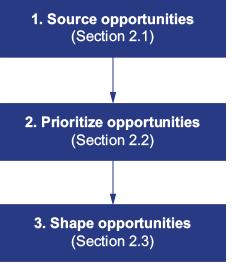
Figure 2.2 The process for discovering AI opportunities
The process
			for discovering AI opportunities

Use the opportunity-discovery process to move from sourcing possibilities to prioritizing and shaping the most valuable AI use cases. section 2.0


How The Art of AI Product Development covers it

How deep it goes
Explains selection and validation criteria but stops short of prescribing a complete implementation design.
Examples
Uses unclear chatbots, measurable AI tasks, evaluation metrics, edge cases, and user feedback as teaching examples.
What it assumes
Assumes awareness of user needs and organizational goals while grounding AI opportunity assessment in those concerns.
What you can do after
Evaluate AI opportunities by user need, impact, feasibility, strategic fit, uncertainty, and feedback requirements.
How it connects
Connects AI opportunity discovery with technical feasibility, business impact, UX design, user feedback, and trust.

Also explained in

Compare how 7 books explain use case →

Related concepts

This explainer was generated by Manning's knowledge graph from the text of The Art of AI Product Development. The section links point to the parts of the book it draws on.




