A post catches your attention, and you interact with it. To a platform, that interaction can be a signal of user engagement: how much people interact with content. Recommender systems use such signals to predict what to show next. section 6.1 section 4.2
Engagement can stand in for value because interactions are observable, while value is personal and difficult to measure. But the two are not the same: a clickbait headline can attract attention without offering much value. Platforms also have incentives to keep users on their sites, where they may click ads and generate data for future recommendations. section 1.3.3 section 1.2.2
Learning from interactions
Suppose you follow accounts A and B but interact mostly with A. A recommender might learn to show more from A and less from B. That can reinforce a known preference while missing other interests. Showing unfamiliar content may reveal those interests, but too much exploration can also frustrate users. section 4.2
Figure 4.1 Recommender systems learn our preferences by observing our interactions with the items they present. There is no guarantee that all the preferences will be appropriately accounted for. In this figure, the user is a book lover, but the system is unaware of their preferences, and it’s reinforcing the known ones.
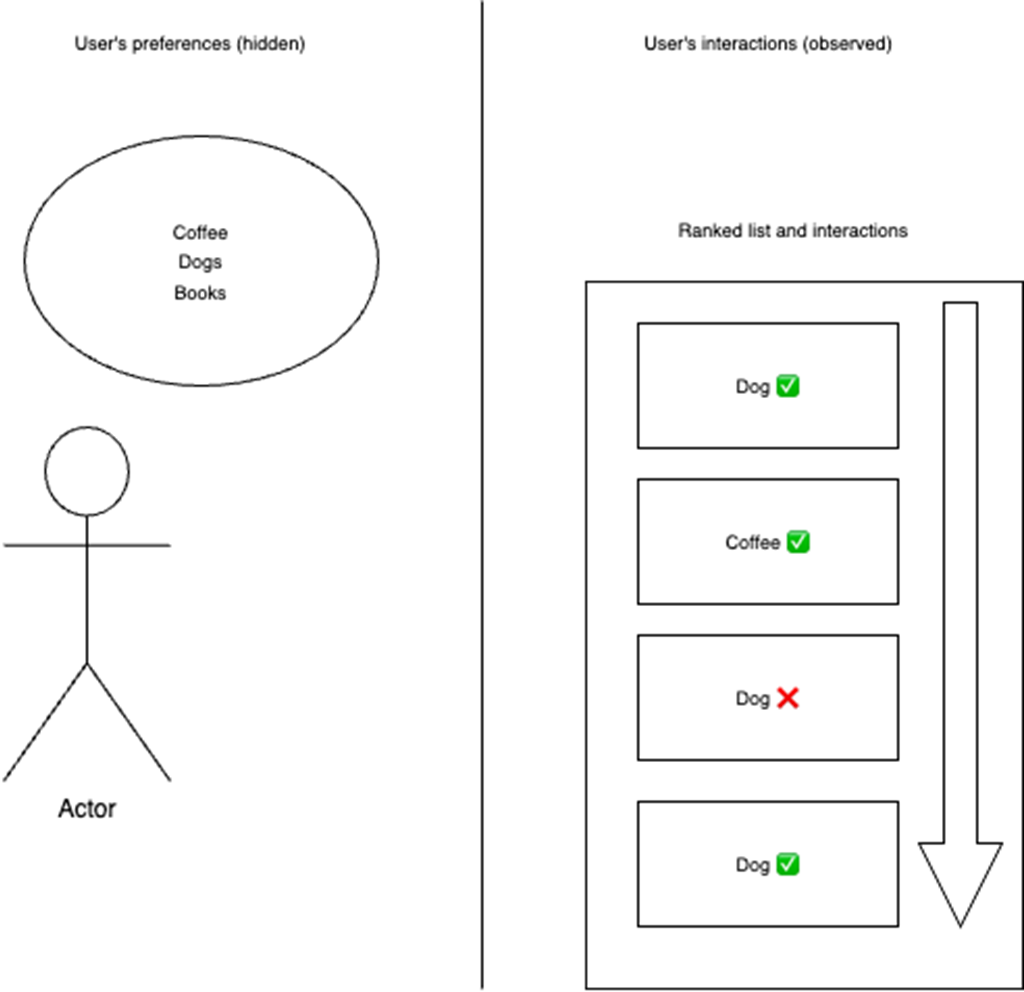
The figure illustrates how recommendations can reinforce known preferences while overlooking others. section 4.2
When engagement misreads a response
In Myanmar, activists used flower stickers to respond to harmful Facebook posts and promote a more positive environment. The system counted those responses as positive engagement, helping promote the harmful posts instead. Engagement-optimized recommendations also made divisive anti-Rohingya content more likely to spread amid existing tensions. section 7.3
Engagement is useful for observing behavior, but it cannot by itself explain why people interacted or whether the result was beneficial. Recommendations and user behavior also influence each other, making their effects difficult to measure. section 1.3.3 section 7.3





