Vertical scaling increases the resources of an existing system instance, such as CPU, RAM, or storage, instead of adding identical instances. In serverless compute, the provider can adjust VM capacity as load changes. section 3.2.4
Scaling Prometheus
Prometheus can be scaled vertically by adding RAM and locally attached persistent storage, allowing one instance to handle more metrics or retain a longer time period. Running multiple copies does not automatically create a distributed telemetry system. section 5.3
Use vertical scaling with these operational boundaries:
- Choose it when increasing the capacity of an existing instance is sufficient for current metric volume or retention needs. section 5.3
- Move toward long-term storage when one Prometheus instance cannot support fleet-wide federation or multi-year queries. section 5.3
- Treat autoscaling as a cost concern in pay-as-you-go environments and track usage with automated alerts. section 3.2.4
Figure 5.2 Time series database concept, showing N time series of the mysvc_http_request_total metric
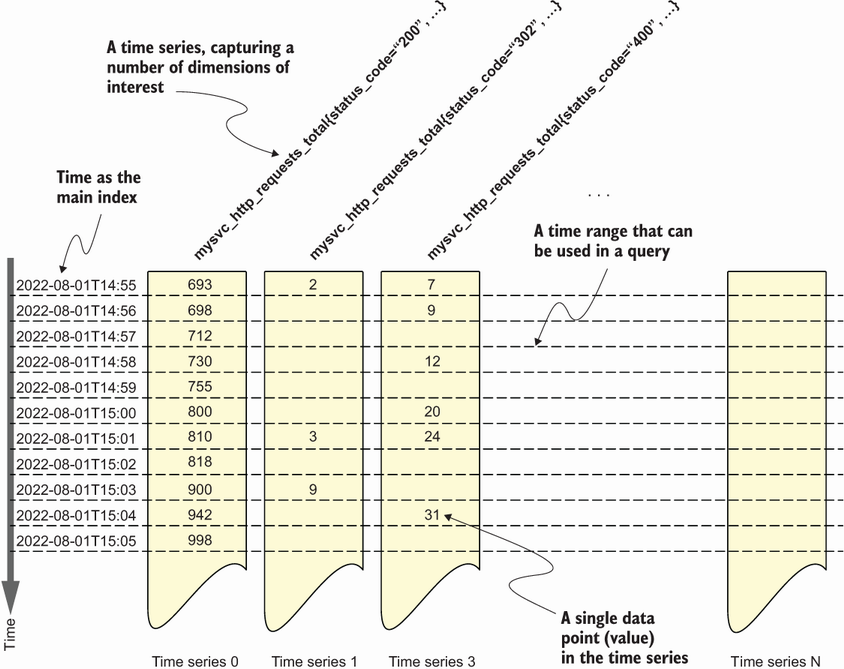
Use the time-series database diagram to relate increasing instance resources to metric volume and retention requirements. section 5.3






