Vertical scaling increases a training machine’s capacity by upgrading its hardware or replacing it with a more powerful node. It is the simplest response when datasets or training workloads outgrow current resources, especially when cloud compute makes adding capacity easy. section 10.3
Use vertical scaling when simplicity matters, but check its ceiling before committing:
- Upgrade RAM, GPUs, or the whole machine to increase available training capacity. section 10.3
- Prefer it when adding cloud resources can solve the immediate bottleneck without substantial pipeline changes. section 10.3
- Switch to horizontal scaling when one machine’s maximum performance is insufficient; expect more engineering effort. section 10.3 section 10.7
A practical ceiling
Doubling or quadrupling a machine’s RAM and upgrading its GPU may extend a training pipeline’s capacity. If the workload still does not fit, vertical scaling offers little further room; distributing the load across machines becomes the alternative. section 10.3
Figure 10.4 Vertical scaling vs. horizontal scaling
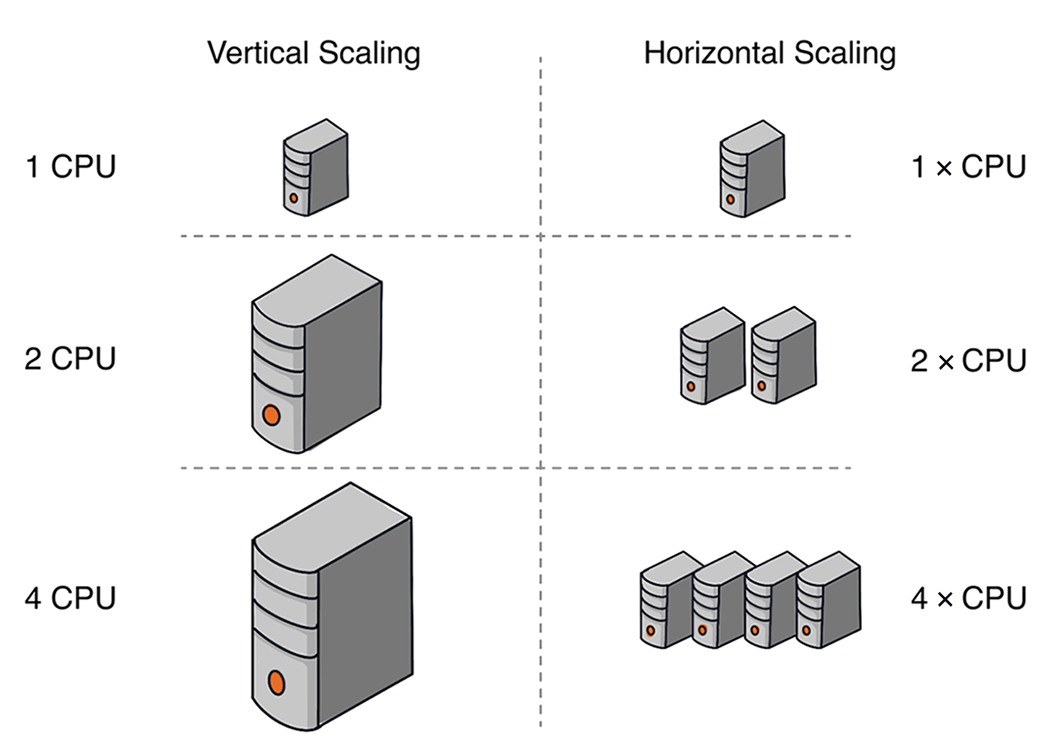
Compare vertical scaling’s single-machine capacity increases with horizontal scaling’s distributed workload. section 10.3






