Video is time-ordered visual data made from multiple images, optionally accompanied by audio synchronized with the progression of those images. section 2.1.1
Search engines treat video as unstructured data alongside text, images, and audio. It is one of the common modalities considered in multimodal search, where different data types become searchable together. section 2.1.1 section 15.3.1
Video combines several searchable dimensions:
- A sequence of images carries visual information across time. section 2.1.1
- Optional synchronized audio can accompany the visual progression. section 2.1.1
- Its multimodal character places it alongside natural language, images, and audio in search systems. section 15.3.1
Figure 2.2 Multiple types of unstructured data. In addition to the text from the last figure, we now see images, audio, and video, which are other forms of unstructured data.
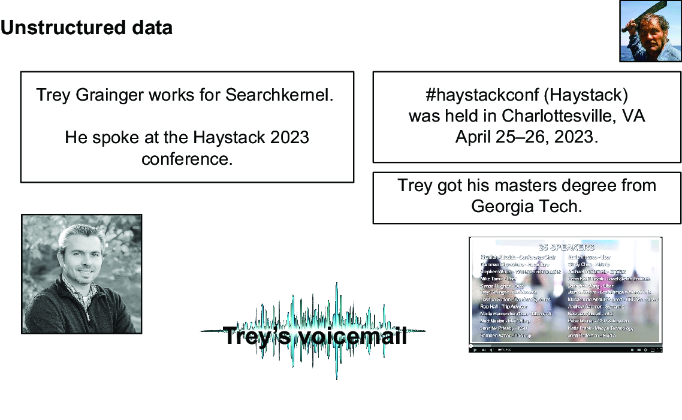
Use the figure to compare video with other unstructured-data types, including images and audio. section 2.1.1




