WebAssembly
WebAssembly is a portable, low-level binary instruction format and execution environment for safely and efficiently running compiled code across browsers and other hosts.
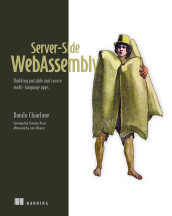
Server-Side WebAssembly
WebAssembly (Wasm) is a portable binary instruction format and execution environment for running compiled code across hardware and operating systems.
- How it is used
- Positions Wasm for server-side, serverless, edge, plugin, database, and cloud-native workloads requiring portable isolated execution.
- How deep it goes
- Explains compilation, runtimes, WASI, sandboxing, packaging, memory primitives, and Kubernetes integration while noting ecosystem and multithreading limits.
- Examples
- Uses Rust Hello World, Docker and Wasm container comparisons, libSQL UDFs, Linux-container conversion, and Kubernetes deployments.
- What you can do after
- Build it from scratch as a Rust module, execute it with a runtime, and deploy Wasm workloads through container and Kubernetes tooling.
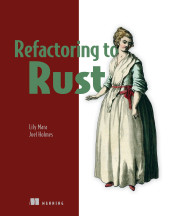
Refactoring to Rust
WebAssembly is a portable bytecode instruction format and execution target for running compiled code in WebAssembly engines.
- How it is used
- Uses Wasm as a bridge for incrementally refactoring JavaScript into Rust and for running compiled modules inside Rust applications.
- How deep it goes
- Explains bytecode portability and works through exporting, building, and loading an asynchronous Rust function.
- Examples
- Uses an asynchronous paper-search function with a JSON-shaped input and a generated web package.
- What you can do after
- Apply it via wasm-bindgen and wasm-pack to export a Rust function for use from JavaScript.
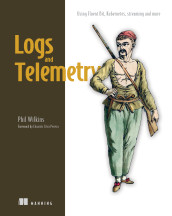
Logs and Telemetry
WebAssembly is a portable binary instruction format and execution target for code running in constrained or embedded environments.
- How it is used
- Packages custom Fluent Bit plugin logic where existing plugins cannot meet specialized integration or processing needs.
- How deep it goes
- Explains plugin boundaries, WASI access controls, benefits, and operational drawbacks without detailing assembly implementation.
- Examples
- Uses a Fluent Bit event-transformation plugin and a Python WASM plugin in a high-volume pipeline as operational examples.
- What you can do after
- Apply it via Fluent Bit to package and independently release custom plugin logic while weighing security and performance constraints.
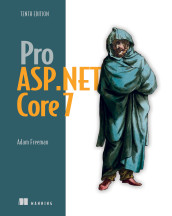
Pro ASP.NET Core 7, Tenth Edition
WebAssembly is a portable binary instruction format and execution environment designed for efficient execution in web browsers and other hosts.
- How it is used
- Runs Blazor applications as self-contained client-side applications without server-side execution or a persistent HTTP connection.
- How deep it goes
- Explains browser execution, component differences, navigation, HTTP data access, and limitations, but does not detail the runtime internals.
- Examples
- Uses a List.razor people table, relative component navigation, HttpClient calls, JSON loading, and successful deletion followed by refresh.
- What you can do after
- Build client-side Blazor components that navigate within a base path and exchange JSON data with HTTP APIs.
Read how Pro ASP.NET Core 7, Tenth Edition explains WebAssembly →

Learn Go with Pocket-Sized Projects
WebAssembly is a portable binary instruction format and execution environment for running compiled code on the web and other platforms.
- How it is used
- Targets browser applications when portable, high-performance execution is needed alongside JavaScript and HTML.
- How deep it goes
- Explains the Go-to-bytecode-to-interpreter pipeline and JavaScript integration, but stops short of detailed runtime internals.
- Examples
- Uses Go source, compiled bytecode, a JavaScript interpreter library, an HTML page, and registered DOM-facing functions.
- What you can do after
- Build browser modules from Go, load them with JavaScript, and connect exported functions to the DOM.
Read how Learn Go with Pocket-Sized Projects explains WebAssembly →
Also covered in
- Writing for Developers: Blogs that get read
- Kafka for Architects
- Vanilla WebIn early access (MEAP)
- Code Like a Pro in Rust
- Web Components in Action
- .NET in Action, Second Edition
- Rust in Action: Systems programming concepts and techniques
- Systems Programming with ZigIn early access (MEAP)
What to know first
- JavaScriptJavaScript is a high-level, dynamically typed programming language standardized as ECMAScript and used for web and general-purpose programming.
- RustRust is a statically typed systems programming language designed for performance, concurrency, and memory safety without requiring garbage collection.
- bytecodeBytecode is an intermediate instruction representation produced from source code for execution or further compilation by a virtual machine or language runtime.
- WebAssembly moduleA WebAssembly module is a compiled, self-contained unit of WebAssembly code and associated definitions that a compatible host can instantiate and execute.
Related concepts
- Rustused by · Rust is a statically typed systems programming language designed for performance, concurrency, and memory safety without requiring garbage collection.
- web standardskind of · Web standards are publicly specified technical rules and interfaces that define web technologies and promote interoperable behavior across the web.
- Blazor WebAssemblyused by · Blazor WebAssembly is a .NET web UI hosting model that runs application components in browsers through WebAssembly.
- bytecodekind of · Bytecode is an intermediate instruction representation produced from source code for execution or further compilation by a virtual machine or language runtime.
- containercontrasts with · A software container is an isolated execution environment that packages an application and its dependencies, typically sharing the host operating-system kernel.
- JavaScriptcontrasts with · JavaScript is a high-level, dynamically typed programming language standardized as ECMAScript and used for web and general-purpose programming.
Questions about WebAssembly
What is WebAssembly?
WebAssembly is a portable, low-level binary instruction format and execution environment for safely and efficiently running compiled code across browsers and other hosts.
Which Manning books explain WebAssembly?
Server-Side WebAssembly, Refactoring to Rust, Logs and Telemetry, Pro ASP.NET Core 7, Tenth Edition and Learn Go with Pocket-Sized Projects.
What should I know before learning WebAssembly?
Manning books that teach WebAssembly usually introduce JavaScript, Rust, bytecode and WebAssembly module first.
What is the difference between WebAssembly and container?
WebAssembly is a portable, low-level binary instruction format and execution environment for safely and efficiently running compiled code across browsers and other hosts. A software container is an isolated execution environment that packages an application and its dependencies, typically sharing the host operating-system kernel.
What is WebAssembly a kind of?
WebAssembly is a kind of web standards. Web standards are publicly specified technical rules and interfaces that define web technologies and promote interoperable behavior across the web.
What is WebAssembly also called?
WebAssembly is also called wasm.
These guides are generated from the text of Manning books by Manning's knowledge graph and link to the sections they draw on. The full books are available on liveBook and at manning.com.