Agentic development
Agentic development is a software-development approach in which AI agents perform or coordinate programming and related engineering tasks, autonomously or with human oversight.
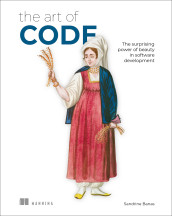
The Art of Code
A software-development approach in which AI agents perform or assist with programming tasks across one or more steps.
- How it is used
- Uses AI agents to accelerate programming while emphasizing human judgment in producing durable, high-quality code.
- How deep it goes
- Explains quality risks and their causes, but does not provide a step-by-step supervision procedure.
- Examples
- Contrasts clean and tangled surrounding code, repeated corrective patches, and working code that nobody fully understands.
- What you can do after
- Evaluate agent-generated code by recognizing quality mirroring, patch accumulation, and comprehension debt.
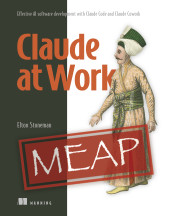
Claude at Work
Agentic coding is a software development approach in which an AI agent directly navigates, modifies, builds, deploys, and tests a repository's codebase.
- How it is used
- Uses an AI agent inside a repository to navigate, modify, build, and test software.
- How deep it goes
- Defines repository access and multi-tool work, then addresses autonomy, permissions, task fit, and human review.
- Examples
- Demonstrates dotnet build, npm start, pytest, and investigating a Kubernetes deployment against YAML.
- What you can do after
- Evaluate AI-generated changes by choosing task autonomy and reviewing build and test results.

Introduction to Generative AI, Second Edition
Agentic coding is software development in which AI agents plan and execute multistep programming tasks with limited human intervention.
- How it is used
- Deploys AI agents within software development workflows to pursue coding goals across files, tests, and debugging tasks.
- How deep it goes
- Explains capabilities and workflow types at a high level, stopping short of implementation details or agent internals.
- Examples
- Uses bug fixing, API modernization, test generation, OAuth implementation, and database migration cleanup as delegated tasks.
- What you can do after
- Apply agentic workflows through Copilot, Cursor, or Windsurf to delegate, test, debug, and refine multistep code changes.
Read how Introduction to Generative AI, Second Edition explains agentic development →
Also covered in
- Effective Behavior-Driven DevelopmentIn early access (MEAP)
- Context EngineeringIn early access (MEAP)
What to know first
- artificial intelligenceArtificial intelligence is the field of computing concerned with creating systems that perform tasks associated with intelligence, such as learning, reasoning, perception, and decision-making.
- specificationA specification is a description of the requirements, expected behavior, properties, interfaces, or constraints that a system or component is expected to satisfy.
Related concepts
- Git repositoryuses · A Git repository is a directory and version-control database that stores files, commits, and their change history.
- Claude Codeimplemented by · Claude Code is Anthropic’s command-line AI coding agent for inspecting and modifying codebases and carrying out software-development tasks through natural-language interaction and tools.
- continuityuses · Continuity is the persistence of relevant identity, state, or information across changes and over time.
- AI agentuses · An AI agent is a computational system that uses artificial intelligence to interpret information and select or perform actions toward goals while interacting with an environment.
- tool useuses · Tool use is the capability of an AI system or agent to request external software operations through defined interfaces to obtain information or perform actions.
Questions about agentic development
What is agentic development?
Agentic development is a software-development approach in which AI agents perform or coordinate programming and related engineering tasks, autonomously or with human oversight.
Which Manning books explain agentic development?
The Art of Code, Claude at Work and Introduction to Generative AI, Second Edition.
What should I know before learning agentic development?
Manning books that teach agentic development usually introduce artificial intelligence and specification first.
What is the difference between agentic development and traditional software development lifecycle?
Agentic development is a software-development approach in which AI agents perform or coordinate programming and related engineering tasks, autonomously or with human oversight. A traditional software development lifecycle is a software process in which work proceeds through stages with substantial human documentation and implementation effort.
What is agentic development also called?
Agentic development is also called agentic coding.
These guides are generated from the text of Manning books by Manning's knowledge graph and link to the sections they draw on. The full books are available on liveBook and at manning.com.