Alignment is the correspondence between a system’s behavior, control mechanisms, and the goals and values of the humans responsible for it. It requires identifying who controls the system, how control is implemented and reported, and whether appropriate humans can meaningfully steer it. section 2.6
Make alignment an explicit delivery and governance concern:
- Assign responsibility for control and document the mechanisms used to steer the system. section 2.6
- Surface and record system behavior through monitoring, alerts, and notifications for users and stakeholders. section 2.6
- Assess harms arising both when the system functions as intended and when it fails, then decide whether mitigations are required. section 2.6
Facial-recognition harm assessment
Evaluate whether intended use could enable dissidents to be identified and arrested, while failures could identify innocent people as criminals; use the findings to guide continuation or mitigation decisions. section 2.6
Figure 2.3 A layered model of ML safety (adapted from Hendrycks et al [7])
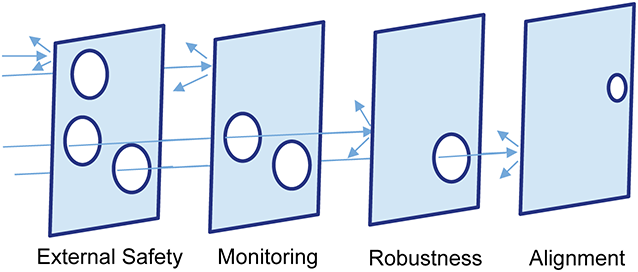
Use the layered safety model to situate alignment alongside broader system-safety concerns. section 2.6





