Asynchronous programming lets work continue without making the initiating operation wait for completion. A queue acts as a handoff point: one component adds messages while another processes them at a steady pace. section 5.5
Queue-based asynchronous processing helps when:
- Input arrives in bursts, but processing capacity should remain steady instead of being overwhelmed. section 5.5
- Separate services need decoupling: producers add messages without knowing which consumers process them. section 5.5
- A failed read should leave the message available for another processing attempt. section 5.5
Banning Books orders
When sales generate more orders than the database-processing path can immediately handle, the website places each order in Azure Queue Storage. A separate process retrieves messages in order and processes them at its own pace. PowerShell can add a message with AddMessageAsync() and retrieve one with GetMessageAsync(). section 5.5
Figure 5.13 Using a Queue Storage for holding orders without overwhelming the order processing
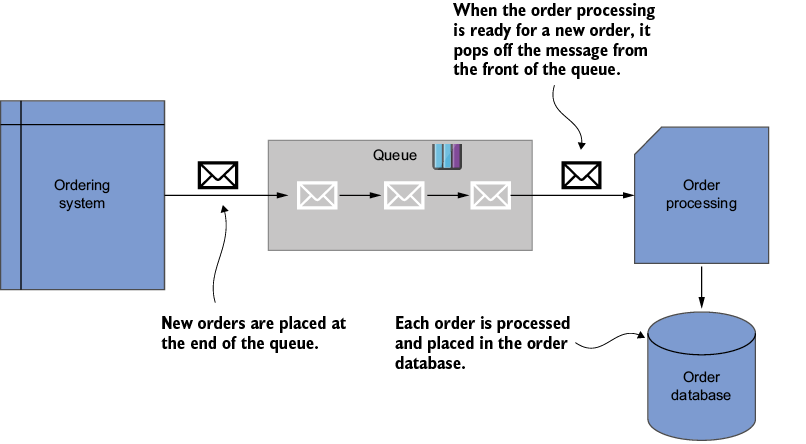
A queue diagram makes the producer-to-consumer flow and buffering role visible. section 5.5



























