An audience is the group of people you want to reach, help, persuade, or involve through a piece of writing. For a technical article, define them before drafting: identify who they are, what they already know, why they care, and what should change after reading. section 4.2.3 section 4.8
Figure 4.1 It’s not all about you + your topic: writing also involves you + your reader and your reader + your topic.
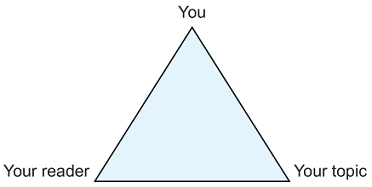
Use the three-way relationship—writer and topic, reader and topic, writer and reader—to avoid treating an article as only a statement of the author’s interests. section 4.2.3
Build an audience profile with four practical questions:
- Who should read this? Separate groups may include current users, developers exploring a technology, interested outsiders, or professionals facing a similar problem. section 4.2.3
- What do they know already? Some readers may understand the underlying systems, while others may know little but still be curious enough to continue. section 4.2.3 section 5.4.2
- Why do they care? Match the article’s promise and emphasis to the audience’s actual interests rather than giving every group equal space. section 5.4.2 section 15.5.4
- What should they do or think differently afterward? Use that intended change to decide what belongs in the article and what should be cut. section 4.2.3 section 5.2
One article, several audiences
A database-migration article might address database users seeking a migration tool, developers learning Zig, and a broad technology audience attracted by the topic. Users need migration fundamentals and practical results; Zig learners need implementation details and language-specific trade-offs; casual readers may need more background. Choose a primary audience, then adapt the introduction, terminology, examples, and level of explanation to that reader instead of trying to satisfy everyone equally. section 4.2.3 section 5.4.2
Audience selection continues during revision. Read as the target reader, look for missing context or unsupported claims, remove distractions, and make the article easier to scan and understand. Speak directly to readers, use language appropriate to their knowledge, and make the article’s value and distinctive perspective clear early. section 5.1 section 5.5.1 section 5.7





