liveBook · Manning

Authorization decision

As explained in Azure Security

Authorization is the process of determining whether an authenticated identity has permission to perform a requested action on a system or resource.

Authorization determines whether an authenticated user or application may access a system or resource and perform a requested action. In Azure, the decision is based on permissions associated with an assigned role. section 2.3

Authorization answers two operational questions:

  • What can the identity access? section 2.1
  • What actions can the identity perform on specific resources? section 2.1
  • Which permissions should be grouped into a role rather than assigned individually? section 2.3

Azure role-based access control (Azure RBAC) provides the platform authorization mechanism. Assigning roles to users or groups supports granular access management and avoids the tedious, error-prone process of maintaining custom permissions for every user. section 2.3.1 section 2.3

Different duties, different roles

Azure RBAC can allow one administrator group to manage virtual machines, one user to manage virtual machines, another to manage SQL databases, or application developers to manage resources within a resource group. section 2.3.1
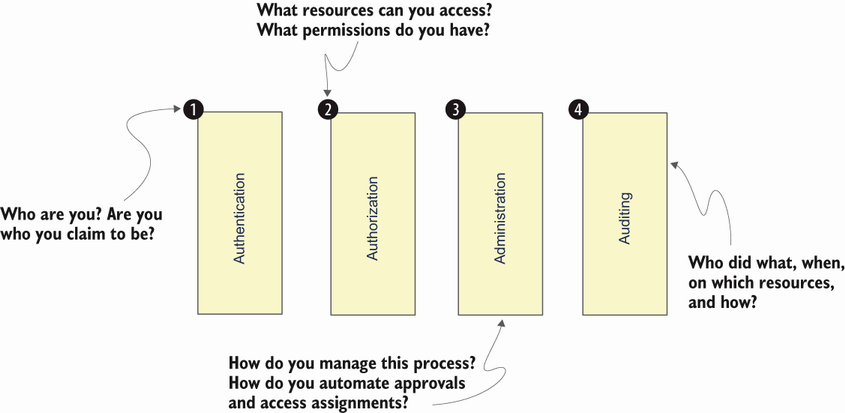
Figure 2.1 Understanding the four pillars of identity on which the IAM system is usually built

Use the four-pillar model to distinguish authorization from authentication, administration, and auditing. section 2.1


How Azure Security covers it

How deep it goes
Defines role-based permission decisions and introduces Azure RBAC, but does not detail configuration procedures.
Examples
Uses virtual machine administration, SQL database management, and resource-group management to illustrate differentiated roles.
What it assumes
Assumes understanding of authenticated identities and distinguishes authorization from identity verification.
What you can do after
Apply Azure RBAC by assigning appropriate permission sets to users or groups for Azure resource tasks.
How it connects
Connects authorization with authentication, administration, auditing, identity governance, and role-based access control.

Also explained in

Compare how 7 books explain authorization decision →

Related concepts

This explainer was generated by Manning's knowledge graph from the text of Azure Security. The section links point to the parts of the book it draws on.




