An authorization decision determines whether an authenticated user, service, or workload may perform an action or access a resource. In distributed systems, the decision is enforced across service boundaries, cluster layers, and cloud projects rather than at a single endpoint. section 4.3.3 section 2.3.2
Authorization decisions appear in several operational layers:
- Service meshes apply identity-based authorization to service-to-service communication and expose policy controls for access control, quotas, and rate limits. section 4.3
- Clusters use role-based access control so existing permissions govern both direct connectivity and requests passing through a proxy. section 2.3.2
- Cloud access adds another decision: a user must be permitted to view the attached Google Cloud project before using Connect, even when cluster permissions allow access. section 2.3.2
- Layered validation rejects requests that skip an authentication or authorization stage, preventing an invalid request from proceeding to the next layer. section 2.3.2
A proxied cluster request
A user connects to a cluster through Anthos Connect. The request carries the user’s credentials, is authenticated at each stage, and must satisfy both cluster RBAC and permission to view the associated Google Cloud project. Failure at any layer rejects the request. section 2.3.2
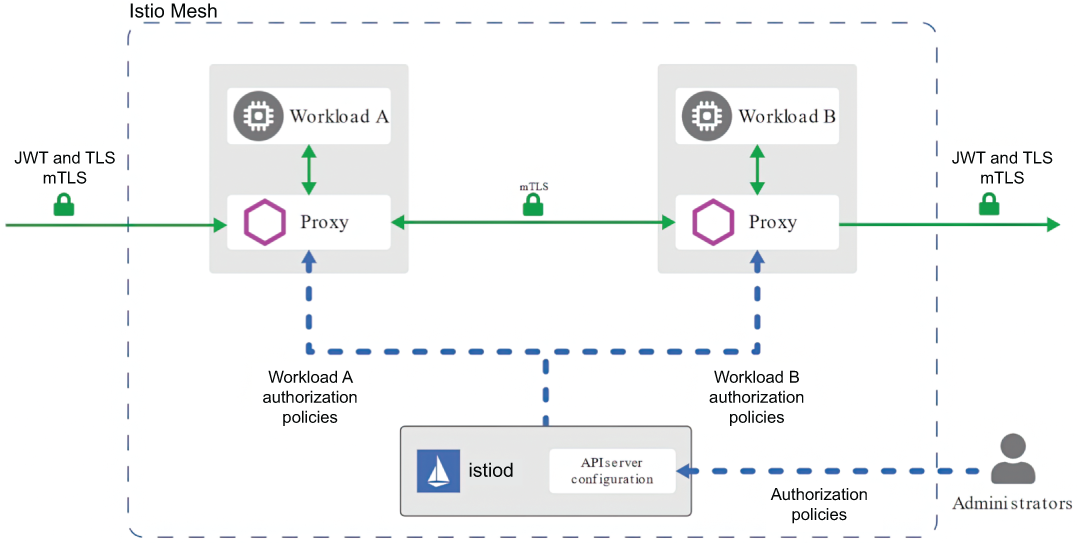
Use the authorization architecture to trace how identities, policies, and enforcement components participate in a service-mesh authorization decision. section 4.3.3






