A foundational model is broadly pretrained on massive datasets, then prompted or adapted to generate general-purpose content across many tasks and domains without domain-specific training. section 12.4.1
In analytics, foundational models support drafting, data exploration, and assistant features embedded in visualization and interactive reporting tools. They accelerate routine work but do not replace analysts’ distinctive organizational value. section 12.4.1
Use foundational models with clear expectations:
- Provide a specific prompt when seeking targeted analysis rather than relying on a vague request. section 12.4.1
- Treat generated content as assistance for drafting and exploration, while recognizing professional risks and the need for analyst judgment. section 12.4.1
Prompted customer-login analysis
A vague request to analyze customer_logins.csv produces a request for clarification. Asking for overall mean and median login_days plus regional means yields concrete summary statistics. section 12.4.1
Figure 12.10 Generative AI creates new content based on user-submitted prompts.
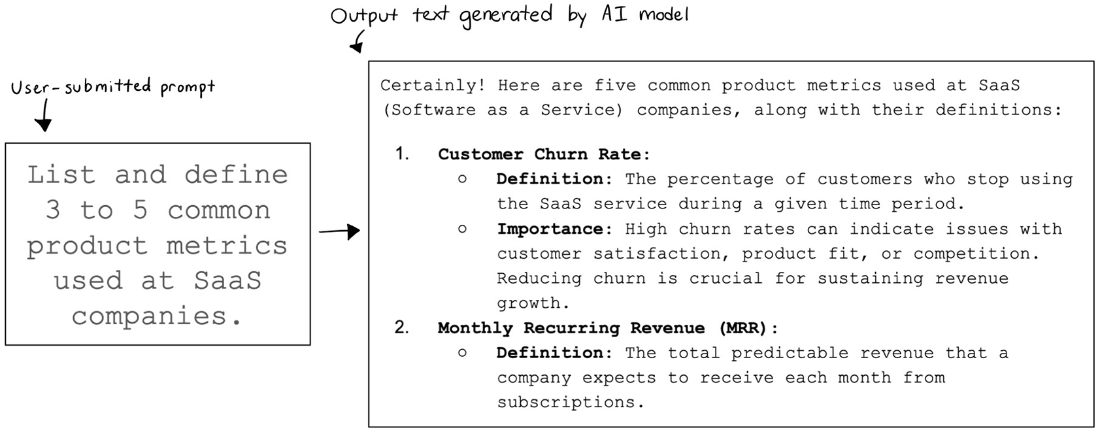
Use the figure to visualize how user prompts guide generative models toward newly created content. section 12.4.1




















