Client-server architecture lets an application request capabilities from external systems: clients send requests, and servers expose tools or agents that handle them. section 5.1.3 section 10.1.2
The request flow depends on the protocol:
- With MCP, a client connects to a server and forwards tool-call requests. Servers can run locally over stdio or remotely over streamable HTTP. section 5.1.3
- With A2A, a client discovers agents through AgentCards, then sends tasks to a server and receives results or errors. Long-running tasks may provide streaming updates or push notifications; A2A standardizes communication, not task logic. section 10.1.2
Figure 10.3 The sequence of interactions for A2A clients discovering agents exposed behind an A2A server
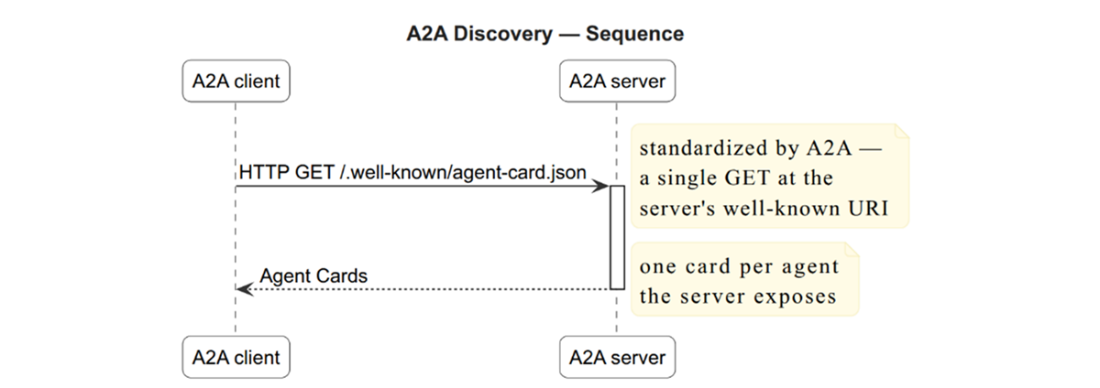
Shows the sequence for discovering agents exposed by an A2A server. section 10.1.2
Figure 10.4 The sequence of interactions for A2A clients to send tasks to A2A servers for their agents to perform
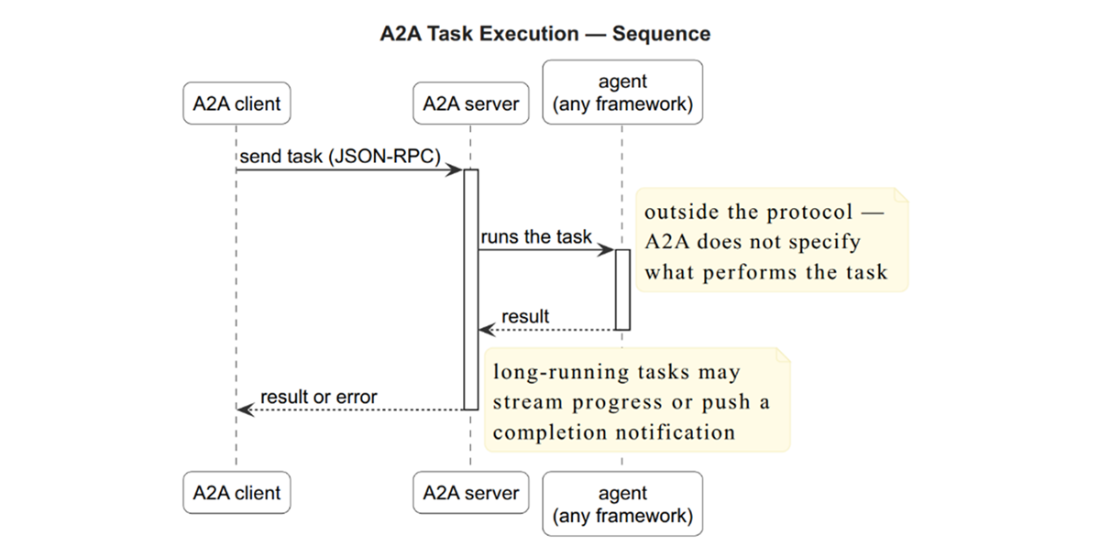
Shows how a client sends tasks to an A2A server for its agents to perform. section 10.1.2