A client-server system splits work between two parties: the client initiates requests, and the server holds resources and fulfills them. Their network boundary replaces fast in-memory calls with communication that can face latency and failure. section 6.2 section 6.2
That boundary is the price of separation. A lightweight client can serve many users while more servers are added behind the scenes; frontend and backend teams can also work independently, as long as they agree on an API contract. section 6.2.5 section 6.2.5
Figure 6.2 The Server never speaks first. The Client must always throw the boomerang.
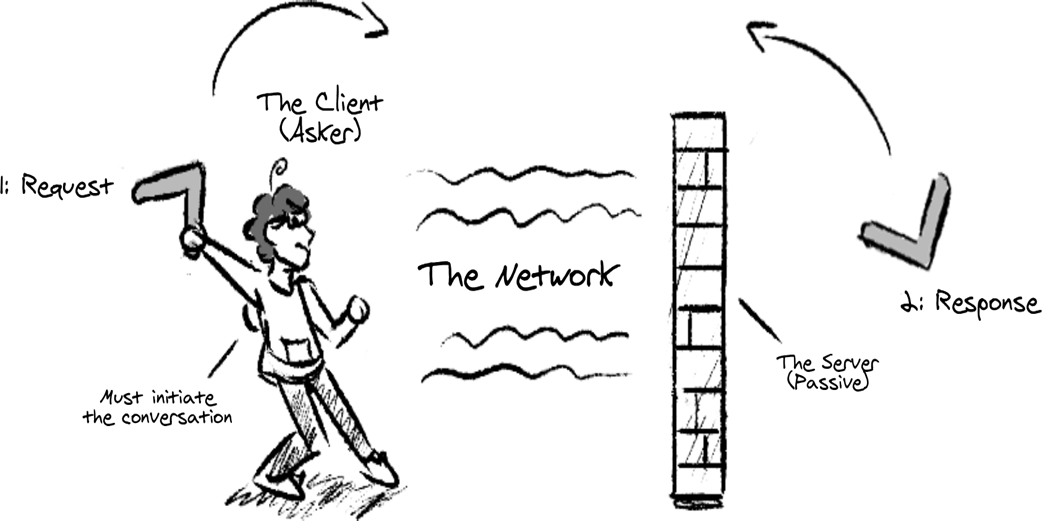
Use the boomerang figure to picture the request-and-response relationship: the client initiates the exchange. section 6.2.3
In scalable web architectures, the server has “amnesia”: each request must carry the context needed to process it. Like a bartender who forgets your order, the server cannot rely on remembering an earlier exchange. section 6.2.3 section 6.2.3
REST builds on client-server separation, alongside constraints such as statelessness, cacheability, and a uniform interface. The split is useful when scaling or specialization matters, but it also makes the network boundary a responsibility to manage. section 6.9.1 section 6.2