A computer cluster is a group of machines coordinated to run workloads as one shared computing system. In Kubernetes, the machines run Kubernetes and containers; each machine is a node. section 8.1 section 8.1.3
A Kubernetes cluster organizes application execution through related components:
- Container runtimes execute portable application bundles in isolation. section 8.1.3
- Pods provide the smallest running unit, including container configuration and optionally multiple resource-sharing containers. section 8.1.3
- Deployments declare container images and desired Pod replicas, while Services expose Pods internally or externally. section 8.0 section 8.1.3
- Namespaces organize resources by project, environment, organization, or team. section 8.1.3
From machines to an application
Start with virtual machines, install or select Kubernetes, and place them in a cluster. Kubernetes then schedules containers across the nodes, maintains the requested number of instances, and exposes them through a Service; managed Kubernetes avoids maintaining the Kubernetes installation and updates yourself. section 8.0 section 1.6
Figure 8.3 Kubernetes concepts
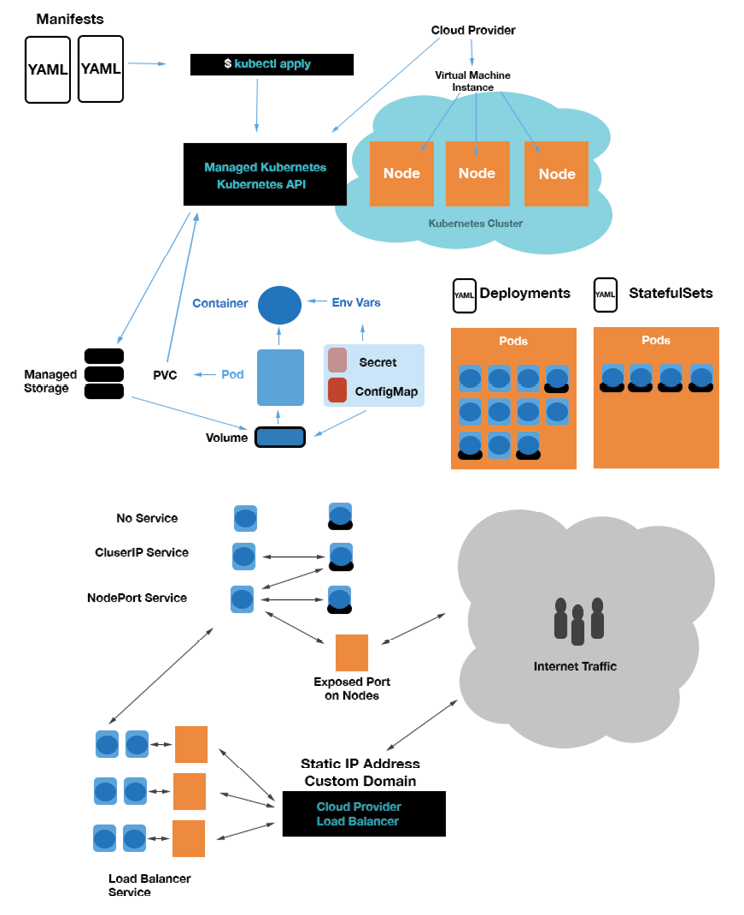
Use the component map to connect clusters, nodes, containers, Pods, Deployments, Services, and related Kubernetes resources. section 8.1.3







