Computer vision programmatically interprets images and videos. In identity fraud detection, it can distinguish a live selfie from a photograph-of-a-photograph used to impersonate a genuine customer during account opening. section 1.5.2
Fraud-focused computer vision supports several image-based checks:
- Automate customer identification by analyzing identity documents and face photographs during online KYC. section 7.0
- Match faces using a pre-trained machine-learning model as part of identity verification. section 7.0
- Extract user information from identity cards with a model built using PyTorch and HuggingFace. section 7.0
- Detect forged receipt regions with pixel-wise segmentation rather than classifying an entire receipt as forged or genuine. section 6.2
Receipt forgery detection
Treat forgery detection as image segmentation: assign each receipt pixel to forged or genuine classes. This directs training toward suspected forgery regions and produces interpretable pixel-wise detections, avoiding proxies such as language differences between forged and genuine receipts. A CNN-based DeepLabV3 model performs the segmentation. section 6.2
Figure 1.17 Face presentation attacks used to sign into a system that requires facial verification. Deepfakes and photos of photos are typical tactics employed by such identity fraudsters.
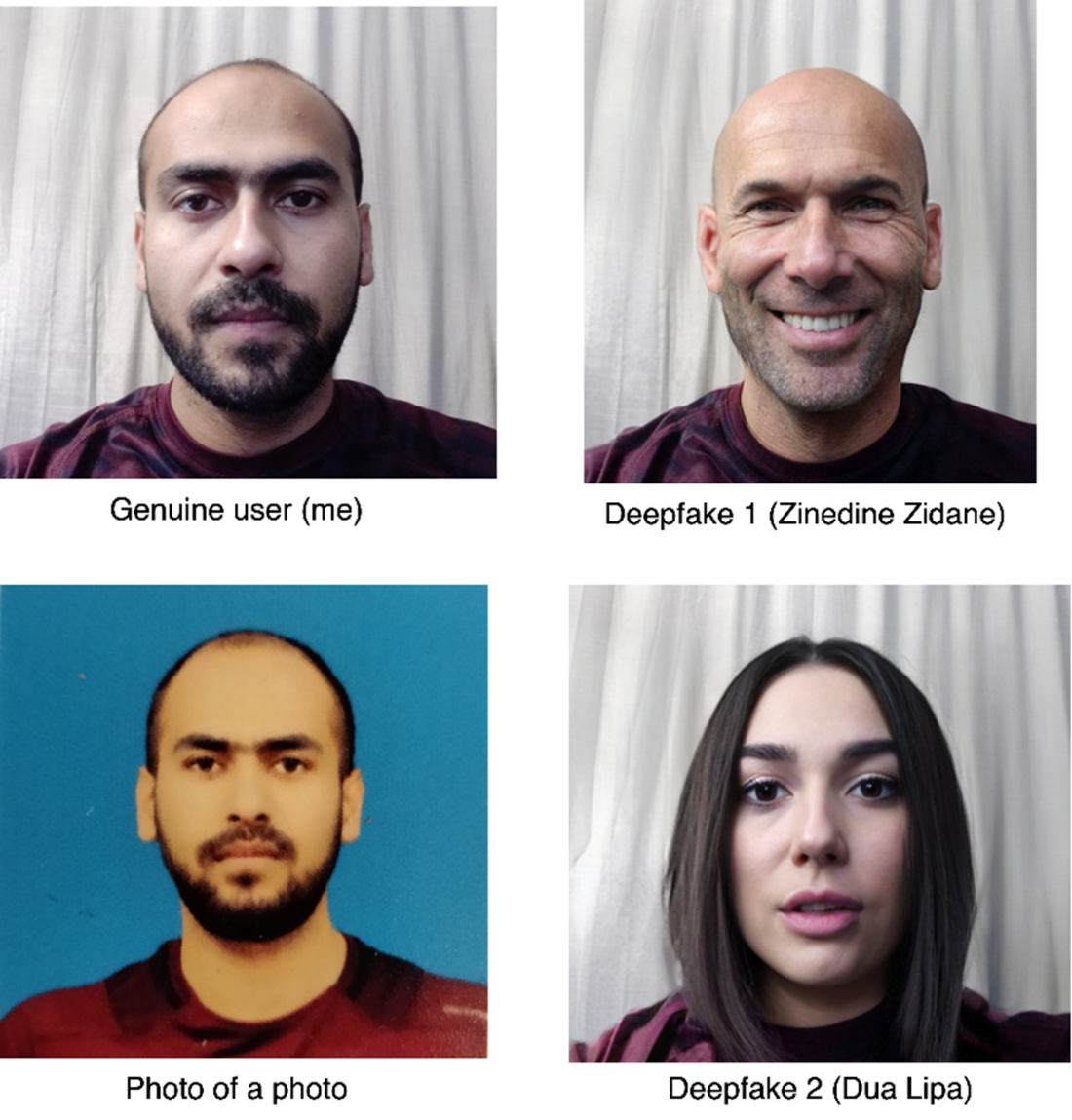
Shows presentation attacks against facial verification, including deepfakes and photographs of photographs. section 1.5.2









