Confidentiality protects data from being viewed by unauthorized parties. Cryptography achieves it by transforming readable data into an unintelligible form that only parties with the corresponding secret can unlock. Like a locked box sent through ordinary mail, encrypted data can travel across shared networks while eavesdroppers see only protected contents. section 1.1 section 1.2
The simplest implementation uses symmetric key encryption: one secret key encrypts the plaintext and decrypts the resulting ciphertext. Security must survive disclosure of the algorithm, source code, and design; only the key should remain secret. This requirement is Kerckhoff’s principle. section 1.2.1 section 1.2.1
Practical confidentiality guidance:
- Use well-established cryptographic implementations rather than developing cryptography in-house for production. section 1.5
- Treat interactions between cryptographic components as a source of subtle weaknesses, even when each component is well established. section 1.5
- If writing cryptographic code from scratch is necessary, obtain broad expert review before deployment. section 1.5
Figure 1.1 Security goals of cryptography
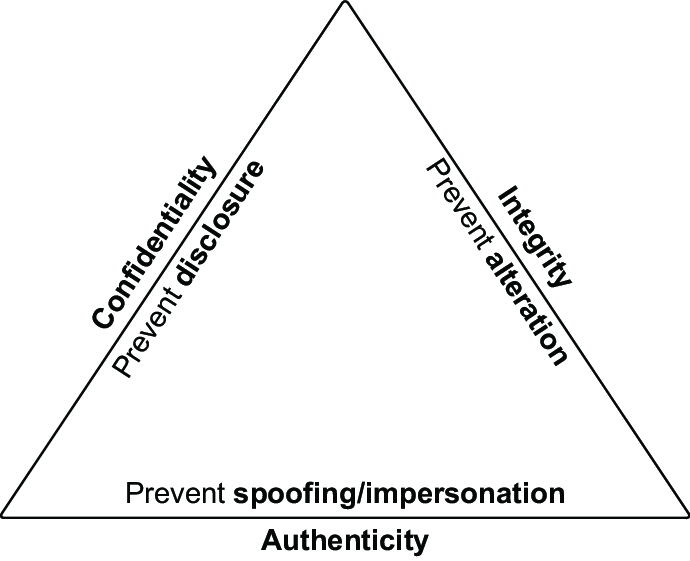
Use the security-goals figure to distinguish confidentiality from integrity and authenticity. section 1.1
Figure 1.2 Using symmetric keys for encryption and decryption
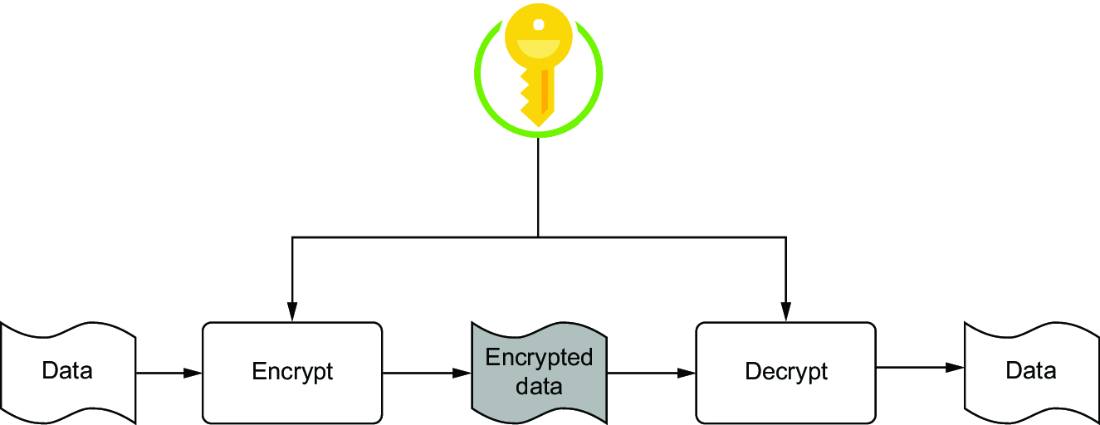
Use the symmetric-encryption figure to trace plaintext encryption and ciphertext decryption with one shared key. section 1.2.1








