Contextual information combines non-sensitive details that can provide enough clues to identify an individual. Removing names, email addresses, and other personally identifiable information does not necessarily prevent deanonymization. section 8.3.3
Identification becomes possible when records are cross-referenced with public information. Dates, ratings, review text, travel patterns, demographics, search queries, or small-group survey results can make people recognizable. section 8.3.3
Common reidentification paths include:
- Matching movie ratings and review details with publicly available IMDb ratings. section 8.3.3
- Linking recurring transit-card travel patterns with social-media check-ins. section 8.3.3
- Combining age, gender, race, ethnicity, and ZIP code to narrow identities. section 8.3.3
- Inspecting search queries or small survey groups whose details reveal specific people. section 8.3.3
Figure 8.13 An employee engagement survey with multiple breakouts can accidentally deanonymize individuals in groups with few members. For example, the sales department has one EEOC group with n=1, making it easy to identify the person and their satisfaction.
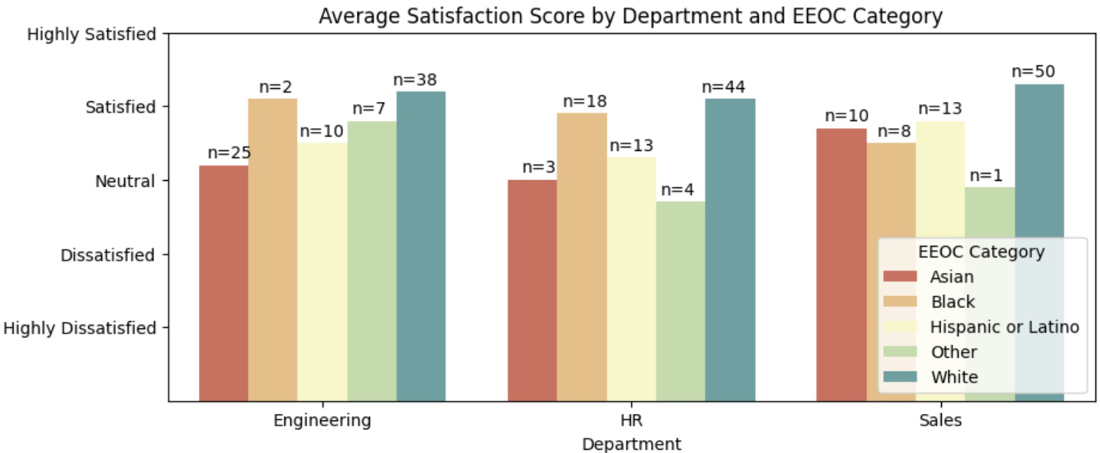
Use the figure to see how multiple survey breakouts can expose an individual in a group with only one member. section 8.3.3

















