A client is the asker in a client-server system: it initiates a request for a resource or operation, and the server does the work. Think of a customer ordering a burger without needing to know how the kitchen cooks it. section 6.2 section 6.3.1
A client might be a browser, mobile app, smart thermostat, desktop application, or another server acting as a consumer. It captures intent and presents results. The server handles business logic, storage, security, and data integrity. section 6.2.2
Figure 6.10 The client and the server never touch directly; they use the contract as the middleman!
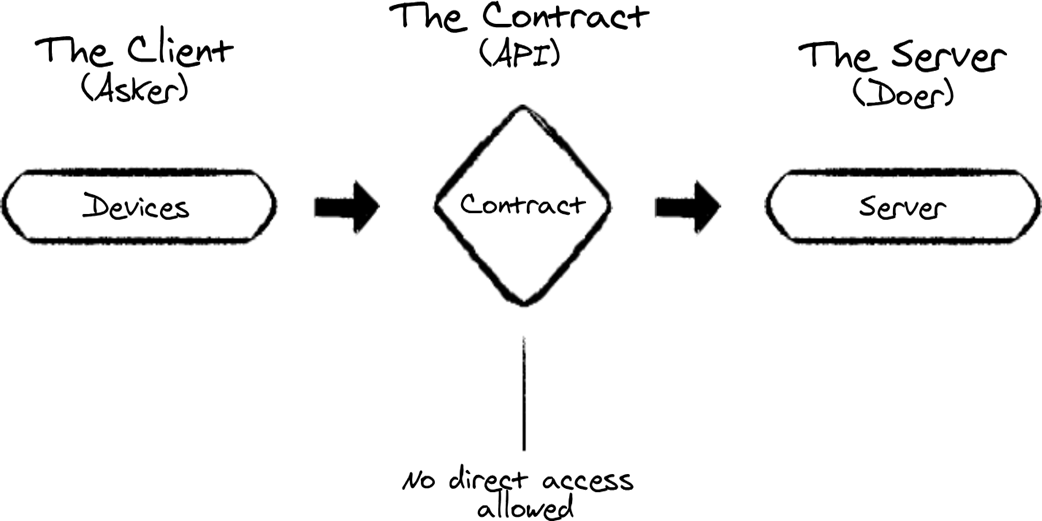
The API contract is the agreed bridge between the client and server. section 6.6
The API is like a menu: it describes what the client can ask for without exposing the kitchen’s inner workings. Keeping to the contract lets the server change its implementation without forcing the client to understand those changes. section 6.3.1
A request and response
A client sends GET /user/123. The server processes the request and returns a response such as 200 OK with a name; the client can then update its interface. The client starts the exchange and waits for the server’s reply. section 6.2.3
A reply does not always mean the underlying work is finished. A server can return 202 Accepted to close the request-response exchange while work continues in the background; the result can arrive later through polling or a callback. This avoids keeping the caller waiting through a slow task. section 6.2.3
How much work should the client do?
- A thin client leaves most work, such as generating HTML, to the server. It is easier to update, but interactions can feel slow when they require network round-trips. section 6.2.4
- A thick client handles more formatting, validation, and interface state. It can give quick feedback or work offline, but adds complexity and raises the risk of outdated versions or duplicated logic. section 6.2.4
A practical split is to check email format on the client for fast feedback, while the server decides whether that address is allowed to register. The network boundary still brings latency and possible failures, so neither side should assume a request will always be quick or succeed. section 6.2.4 section 6.2