A demand forecast predicts the future, unconstrained demand customers will have for an item, service, or product over a defined period. It answers what customers want, how much they want, and when they want it—not what the business can currently supply or sell. Its purpose is practical: give supply-chain decision-makers useful information for buying, producing, moving, and storing goods. section 2.2.1 section 2.1
Forecasts are inputs to decisions, not decisions themselves. A supply plan states what will be produced, purchased, or shipped after considering constraints and inventory targets; a financial budget translates expected activity into expenses and revenues; sales are demand that supply can fulfill. Keeping these separate prevents a forecast from being distorted by operational targets or shortages. section 2.2.2 section 2.3
Ice cream demand versus sales
If children are expected to want 15 chocolate ice creams tomorrow, 15 is the demand forecast. When chocolate ice cream is out of stock, sales may be zero even though demand remains positive. Forecasting those zero sales can perpetuate the shortage: no predicted sales leads to no replenishment, which leads to no future sales. The forecast should estimate the underlying customer demand instead. section 2.2.1
Make a forecast useful by designing it around the decision it supports:
- Choose the aggregation level and horizon from the decisions colleagues must make, rather than defaulting to the most detailed available data. section 5.3.1 section 14.4.1
- Use granular data when it adds signal, but test whether it improves the required forecast; a daily model can inform a weekly replenishment forecast. section 5.3.2
- Keep updating demand information even when a supply plan is frozen, because revised near-term demand can change orders affecting later inventory. section 6.2
- Protect the estimate from organizational bias by separating it from sales targets, budgets, and supply plans, and by accounting for lost sales where possible. section 16.2 section 16.2.3
Figure 2.2 Demand, supply, and sales
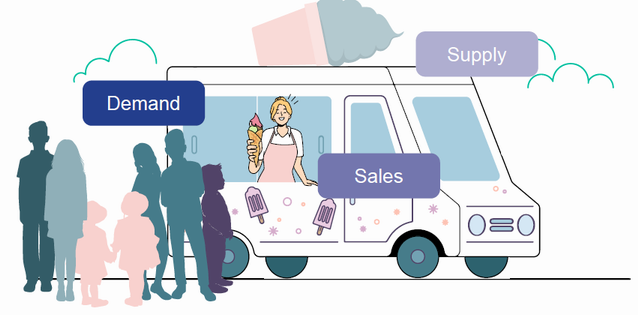
Inspect the relationship between unconstrained demand, available supply, and realized sales before using sales history as forecast input. section 2.2.1
Forecast quality is not accuracy in isolation. A useful forecast is one at the right level and horizon, based on relevant demand data, monitored with suitable metrics, generated from an appropriate baseline, and reviewed efficiently. Better forecasts can support higher service levels, better production and supply plans, less waste and inventory, and lower costs. section 1.2 section 17.0

