False-positive rate (FPR) is the percentage of alerts incorrectly identified as threats. Lowering it improves detection accuracy and reduces analyst alert fatigue. section 8.6.1
Treat FPR as an operational risk signal rather than an isolated count: excessive irrelevant alerts can overwhelm analysts and delay incident response. section 8.6.1 section 8.6.2
Comparing detection improvements
SecureData Inc. reported a 60% FPR alongside 200 daily adverse events, high detection and response times, and alert fatigue. After revising analysis processes, applying advanced filtering, improving event correlation, and using machine learning, irrelevant alerts fell as the broader detection metrics improved. SecureTech Solutions reduced its FPR from 45% to 15% through better detection-algorithm tuning and improved initial incident triage. section 8.6.2 section 9.5.3
Figure 8.6 The left side shows the adverse event analysis dashboard before implementing enhancements. The right side shows the dashboard after implementing enhancements.
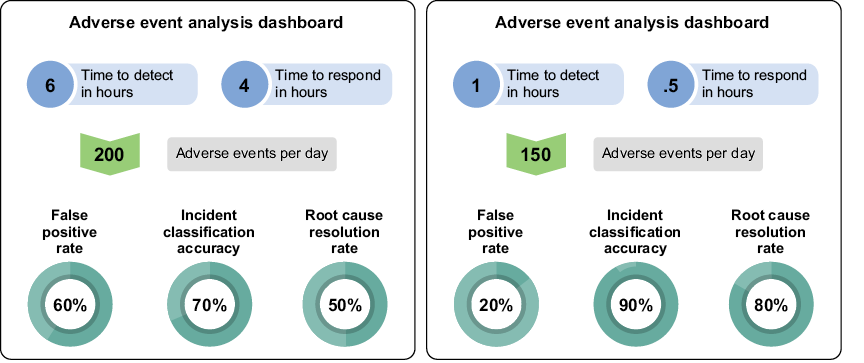
Compare before-and-after adverse event analysis dashboards and connect FPR changes with detection, response, and classification metrics. section 8.6.2
Figure 9.4 The left side shows SecureTech’s incident analysis dashboard before improving the incident management process. The right side shows the dashboard after improvements.
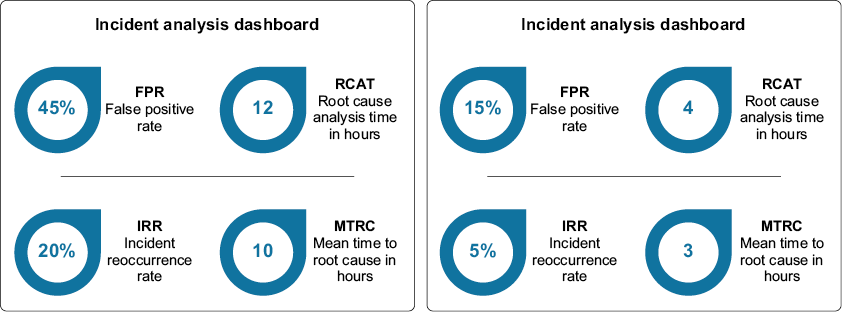
Inspect how FPR reduction appears alongside faster root-cause analysis and lower incident recurrence in an incident-management dashboard. section 9.5.3









