liveBook · Manning

Gaussian mixture model

As explained in Grokking Machine Learning, Second Edition

A Gaussian mixture model is a probabilistic model representing data as a mixture of Gaussian component distributions.

A Gaussian mixture model represents data as a mixture of Gaussian component distributions. For clustering, it gives each point a fraction of membership in every existing cluster rather than assigning it to only one. section 2.11

Soft membership for an email

Suppose an email could belong to three groups, A, B, and C. The model might assign 60% membership to A, 25% to B, and 15% to C. section 2.11

Figure 2.5 A plot of the email dataset. The horizontal axis corresponds to the size of the email and the vertical axis to the number of recipients. We can see three well-defined clusters in this dataset.
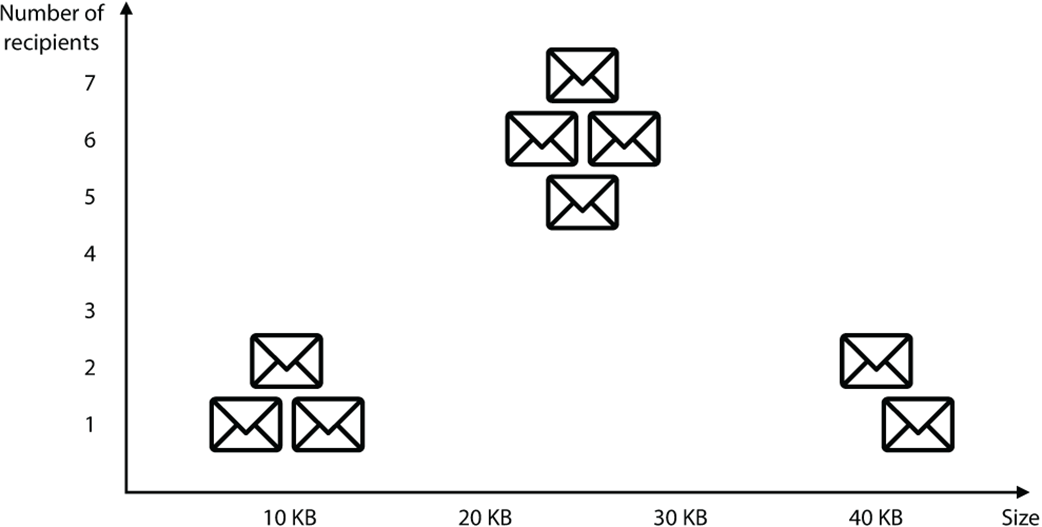
A plot of email size against recipient count shows three visible groups, providing an intuitive setting for soft cluster assignments. section 2.11


How Grokking Machine Learning, Second Edition covers it

How deep it goes
Defines soft assignments with a three-cluster percentage example but defers detailed algorithm study.
Examples
Uses an email dataset plotted by message size and recipient count, with three visible clusters.
What you can do after
Evaluate/understand a point's fractional membership across multiple clusters.
How it connects
Connects Gaussian mixture models with clustering algorithms, including K-means, hierarchical clustering, and DBSCAN.

Also explained in

Compare how 6 books explain Gaussian mixture model →

Related concepts

This explainer was generated by Manning's knowledge graph from the text of Grokking Machine Learning, Second Edition. The section links point to the parts of the book it draws on.