liveBook · Manning

Generalization

As explained in Effective Data Analysis

The extent to which findings from a study apply to populations, settings, or conditions beyond those directly examined.

Generalization is the extent to which findings apply beyond the specific people, settings, or conditions examined. Its scope should be stated explicitly so stakeholders do not treat limited results as broad conclusions. section 2.2.1

Use generalization to keep interpretation aligned with the evidence:

  • State whether results extend to a broader population than the one included in the analysis. section 2.2.1
  • Distinguish generalization from claims about correlation, causation, statistical significance, or null results. section 2.2.1
  • Use precise wording to prevent findings from being expanded into unsupported recommendations or predictions. section 2.2.1

Help Center visits and chat volume

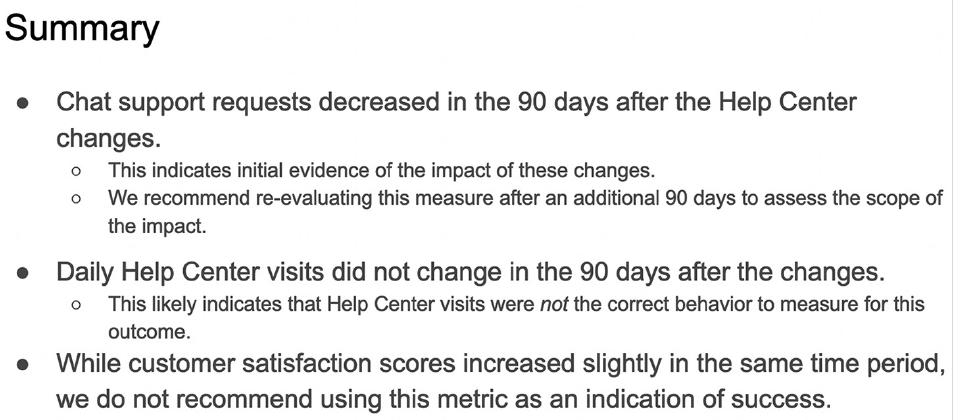
Results about a team’s Help Center visits and chat volume can lose their original limits as colleagues share them, eventually becoming broad claims about the value of future search-optimization efforts. section 2.2.1

A slide such as this delineates the scope of interpretation and helps ensure the long-term success of your work.
sidebar figure

A scope-of-interpretation slide helps stakeholders see which conclusions the findings support and which conclusions go beyond them. section 2.2.1


How Effective Data Analysis covers it

How deep it goes
Defines interpretation scope and links it to precise language, but stops short of presenting formal generalization procedures.
Examples
Uses Help Center visits, chat volume, search optimization, and scope-of-interpretation presentation slides as examples.
What it assumes
Assumes familiarity with analytics findings and introduces distinctions among correlation, causation, significance, and generalization.
What you can do after
Apply it via precise language that clarifies supported conclusions, limits overreach, and prompts stronger stakeholder questions.
How it connects
Connects generalization with correlation, causation, statistical significance, null hypotheses, research design, methodology, and stakeholder communication.

Also explained in

Compare how 13 books explain generalization →

Related concepts

This explainer was generated by Manning's knowledge graph from the text of Effective Data Analysis. The section links point to the parts of the book it draws on.










