A graphics processing unit (GPU) is a parallel processor originally designed to render images. Its ability to perform many operations at once also suits the large-scale numerical workloads used to train and run modern AI models. section 8.1.2
GPUs became standard for AI in part because they combine flexibility with a mature software ecosystem, including NVIDIA’s CUDA platform. That general-purpose flexibility can be less efficient than specialized chips on highly specific workloads. GPU supply is also constrained by a capital-intensive production chain and limited manufacturing capacity. section 8.1.2
Figure 8.1 The large language model ecosystem. Models are built on a layered system that begins with specialized hardware and extends through cloud infrastructure and model providers. Interaction with this system occurs primarily through the two bottom layers, where users either consume models via managed services that abstract the underlying complexity or deploy open-weight models on self-managed infrastructure, taking on greater control and responsibility.
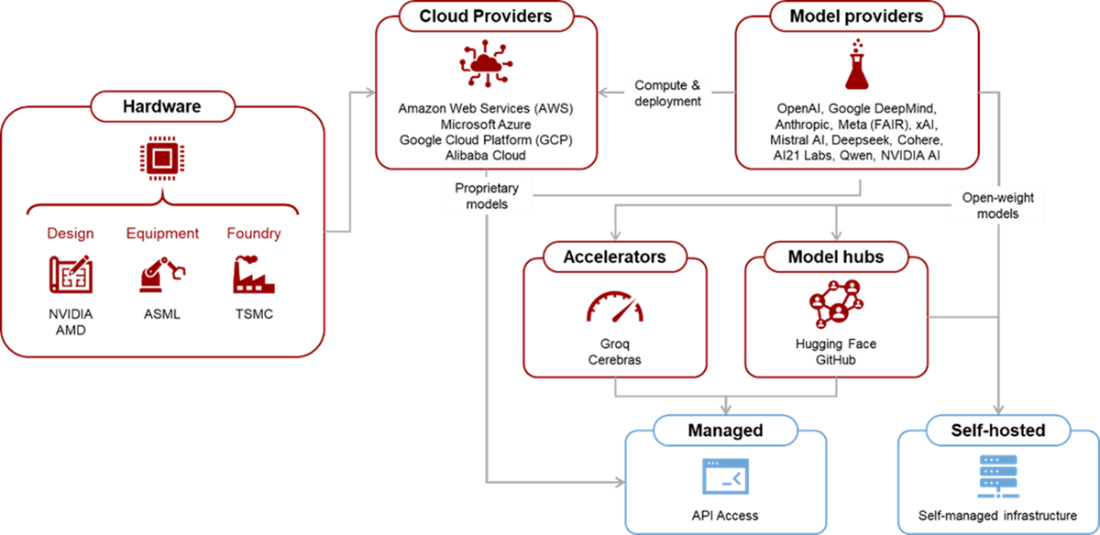
Shows how specialized hardware fits into the broader infrastructure supporting AI models. section 8.1.2