A hypervisor, or virtual machine monitor, separates an operating system from physical server resources and presents it with virtual hardware. Multiple virtual machines can then share one physical server, and instances can be created on demand. section 2.1.2
The practical effects include:
- Higher server utilization: corporate data-center servers averaging 6% utilization can reach 65% or more with virtualization. section 2.1.2
- Faster provisioning: virtual servers can be ready for application deployment in minutes or hours rather than the 60–90 days or more physical servers may take. section 2.1.2
Figure 2.3. Virtual machine architecture using VMware as an example. The virtualization layer is what interfaces directly with all hardware components, including the CPU. That layer then presents each guest operating system with its own array of virtual hardware resources. The guest OS doesn’t operate differently than it would if installed on the bare hardware, but now several instances of guest OSs with all their applications can share a single physical device and have higher effective utilization. Source: VMWare.
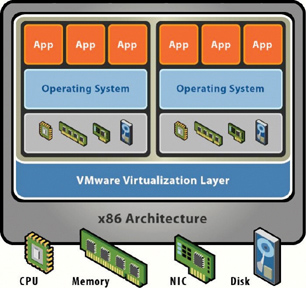
The diagram shows the virtualization layer interfacing with hardware and presenting separate virtual hardware resources to guest operating systems. section 2.1.2