Incident response is the organized process for identifying, investigating, escalating, and handing over security incidents. It connects threat hunting with incident responders and other operational teams through recorded findings, notification, and escalation. section 4.6 section 11.0
A repeatable response workflow includes:
- Recognize a significant finding and open a security incident case. section 11.0 section 10.2.6
- Record the evidence, activities, tasks, severity, ownership, and current status. section 11.1.10
- Escalate or hand the case to the incident-response team while preserving collaboration with investigators. section 4.6 section 11.1.10
- Continue investigating and, when necessary, monitor the environment to determine compromise scope. section 10.2.6
Firewall exposure and compromised FTP server
Threat hunters found a permissive GCP internet-firewall rule exposing Windows and Linux servers. An adversary attacked the exposed FTP service, recovered a password, downloaded system files, and attempted SSH access. The team disabled the rule, documented the evidence in a high-severity incident case, and assigned it to incident response under investigation. section 11.1.10
Figure 10.5 Email containing the deception alert details
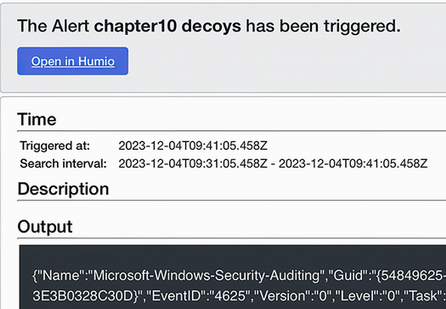
Use the deception alert artifact as an example of how an alert becomes an incident requiring case assignment, investigation, and scope monitoring. section 10.2.6


