What happens when you send a picture, message, or video online? More than delivery occurs: the action enters a wider process involving networks, communication protocols, and data that may have consequences beyond the intended recipient. section 1.1 section 3.1
The internet began with ARPANET, a 1969 U.S. Defense Department project. It later expanded beyond military and government settings, carrying an early hope of open participation before commercial access and data-driven business models reshaped its role. section 3.1
Several shifts explain why the internet matters beyond connection:
- Paid access made network participation a commercial service, beginning with early dial-up providers. section 3.1
- Search services made the expanding World Wide Web easier to use while generating valuable activity and user data. section 1.3.3
- Advertising connected online activity to the older practice of using consumer data to target sales. section 1.3.3
- Governments continue to debate how online behavior, commerce, and communications should be regulated. section 3.1
A casual upload
Sending a silly audio clip to a friend feels like a private, completed act. Examining how the media travels over the internet reveals additional data activity and can make the sender more deliberate about sharing. section 1.1
Figure 1.1 Global search engine market share. Source: Reliablesoft (https://www.reliablesoft.net/top-10-search-engines-in-the-world/)
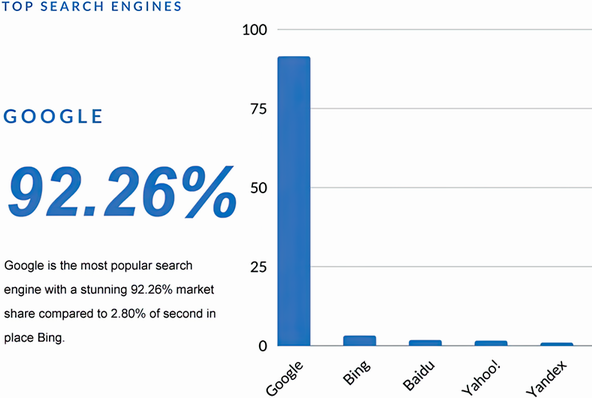
Compare the global search-engine market share that helped make online search a dominant gateway to the Web. section 1.3.3
