Investing acquires an asset or position to generate income or appreciation. It differs from gambling, which follows instinct, and trading, which pursues shorter-term price movements and generally carries more risk. section 1.3 section 1.6
A disciplined investing workflow connects research with decision-making:
- Collect security data from financial platforms and public information. section 1.3
- Use analytical methods, including machine learning and AI, to generate insights. section 1.3
- Form an investment thesis, challenge its assumptions through research and peer review, and assess ethical, competitive, and obsolescence risks. section 4.6
- Document decisions and retrospectively examine outcomes to improve the process while controlling emotional reactions. section 13.7
A growth-investment candidate
A niche company may merit investigation if it solves a specific problem, can generate substantial cash over an extended period, and has a business model competitors cannot easily copy. Potential remains only a starting point: thorough assessment, patience, and risk review are required. section 4.6
Figure 1.1 A survey of the tools and techniques covered in this book, including pointers to the chapters that focus on the relevant domains
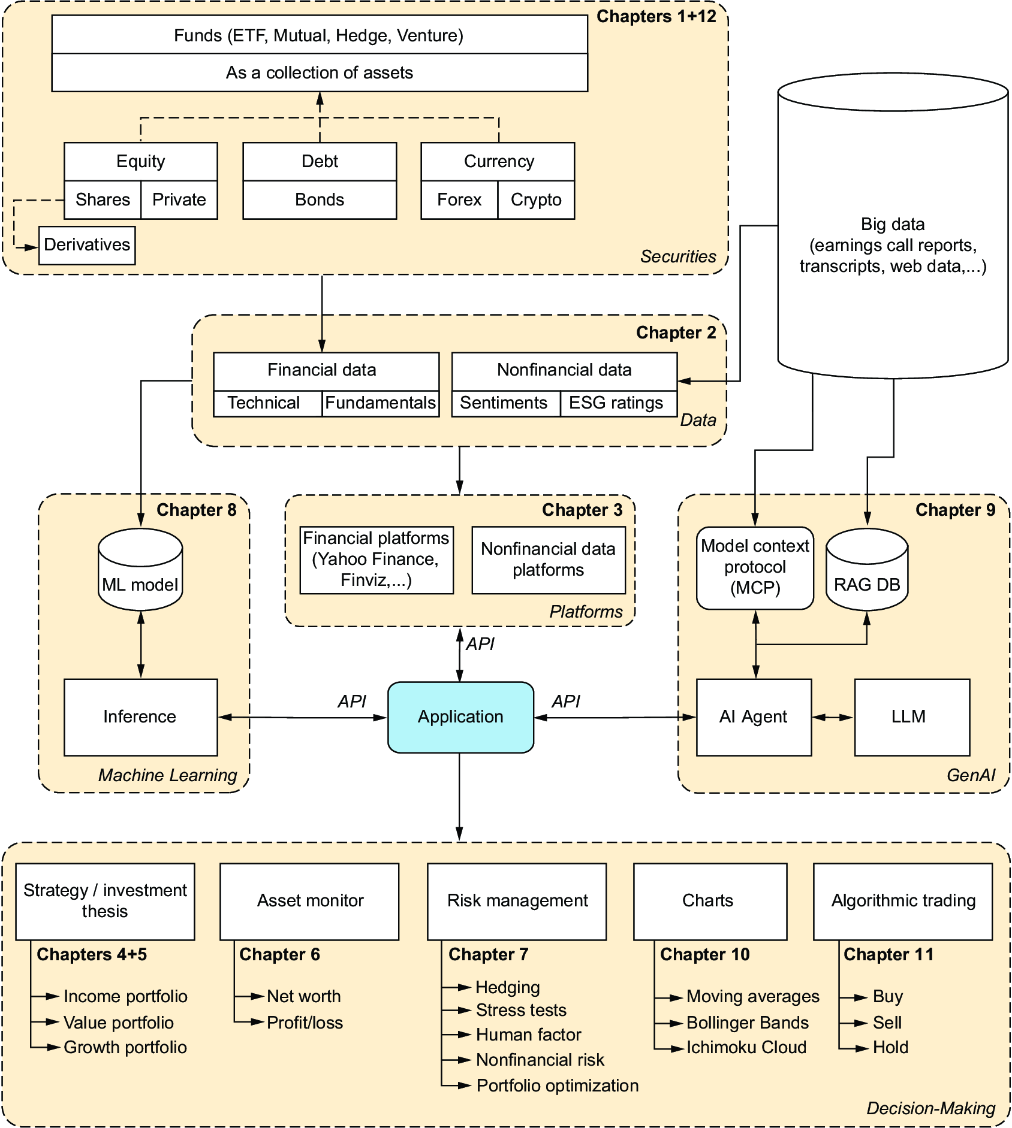
Maps the analytical tools and techniques used across the investing workflow, supporting navigation from data collection to decision-making. section 1.3

