A lighthouse customer is an early adopter that embraces a product near launch and acts as a visible signal to later customers. Their approval does not guarantee mass-market demand, but a critical mass helps a startup move beyond early adopters toward the early majority. section 5.0 section 14.2
The practical job is not merely to win a logo. Work with the customer to identify the smallest feature set they will pay for, then use interviews and repeated feedback to revise that MVP without building features nobody needs. section 14.0 section 14.1
A lighthouse customer can help by:
- Checking whether the MVP misses a critical feature and exposing usability flaws. section 14.2
- Providing early revenue, even when initial access is free for some customers. section 14.2
- Acting as an influential reference that spreads awareness and attracts further customers. section 14.2
- Giving investors and go-to-market planning evidence that a sellable MVP and product–market fit are emerging. section 11.0 section 14.2
Defining a deliberately narrow MVP
A semiconductor company, NXP, helped define an MVP for processor-security oversight: three rules, simple processors, and one simple operating system. Requests for more processors, rules, and operating systems became later roadmap work rather than launch requirements. section 14.1.2
Figure 14.1 The bell curve of new technology adoption and the chasm that is so hard to cross. Licensed under the Creative Commons Attribution 3.0 Unported license.
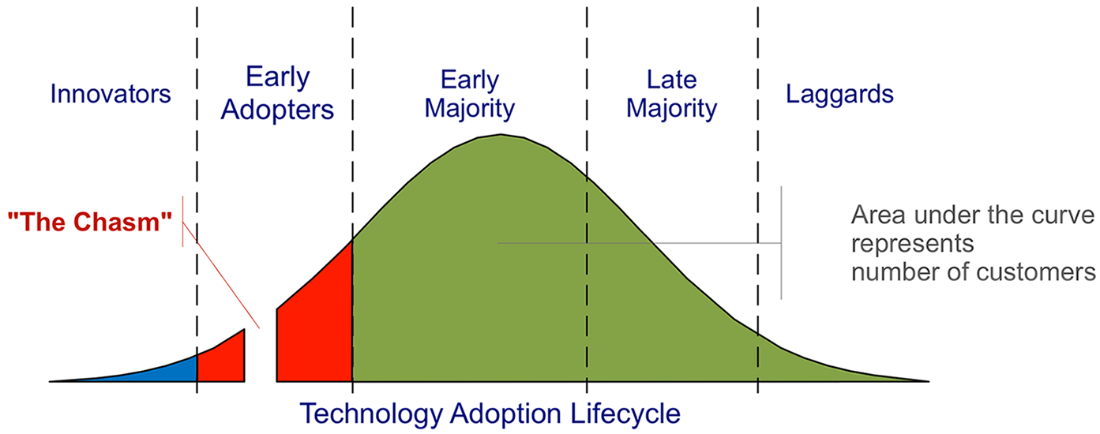
Use the adoption curve to place lighthouse customers among early adopters and see the gap between them and the early majority. section 14.2
Start with a market problem, find an early adopter whose needs can shape a pay-worthy MVP, and iterate from real feedback. Treat the relationship as evidence and guidance—not permission to overbuild for one demanding customer. section 14.1 section 14.1.2
