Minimum viable product
A minimum viable product is an early product version with enough functionality to deliver core value and test assumptions with users.

Think Like a Software Engineering Manager
A minimum viable product is the simplest product version with enough value and essential functionality to gather feedback and validate assumptions.
- How it is used
- Uses an MVP to validate assumptions at launch and an early draft to gather feedback during negotiations.
- How deep it goes
- Defines the MVP by its essential features and explains feedback-driven releases, without prescribing a fixed feature-selection procedure.
- Examples
- Uses an early product draft and a 12-feature plan exceeding quarterly capacity by 106 days to illustrate negotiation.
- What you can do after
- Practice/perform early feedback gathering and negotiate a smaller commitment when estimated features exceed team capacity.
Read how Think Like a Software Engineering Manager explains minimum viable product →
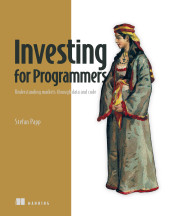
Investing for Programmers
A minimum viable product is the simplest product version that can be deployed to test its value proposition with users or customers.
- How it is used
- Uses the MVP to validate a start-up’s value proposition and inform pre-seed and seed-stage investment decisions.
- How deep it goes
- Defines the MVP’s validation role and links it to customers and scalability, but does not detail product-development methods or testing metrics.
- Examples
- Uses a two-founder start-up with backend, frontend, cloud, marketing, sales, customers, and investor funding decisions.
- What you can do after
- Evaluate early-stage opportunities by checking product potential, customer demand, execution ability, and evidence of scalable replication.
Read how Investing for Programmers explains minimum viable product →
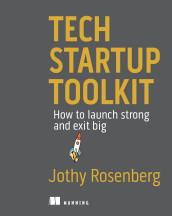
Tech Startup Toolkit
A minimum viable product is the smallest product version that delivers enough value to test core assumptions with users or customers.
- How it is used
- Guides early product decisions toward a sellable solution validated by lighthouse customers.
- How deep it goes
- Defines MVP, contrasts it with prototypes, and details an iterative customer-feedback process without implementation internals.
- Examples
- Illustrates scoping through a semiconductor security product limited to three rules, simple processors, and one operating system.
- What you can do after
- Apply it by defining, testing, and iterating a narrowly scoped product that early adopters will pay for.
Read how Tech Startup Toolkit explains minimum viable product →
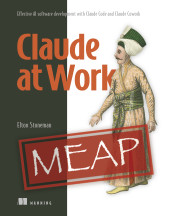
Claude at Work
A minimum viable product is an early implementation containing enough functionality to validate workflows and provide useful value.
- How it is used
- Uses an MVP to establish and test key workflows before completing a greenfield service.
- How deep it goes
- Walks through scoping, plan approval, testing, API exploration, and completion of an authentication service.
- Examples
- Uses an authentication service with local sign-in, token-based profile requests, and a later Dex integration.
- What you can do after
- Apply it via Claude Code to scope, build, test, and review an initial service implementation.

The Art of AI Product Development
A minimum viable product is a product version containing enough functionality to deliver value and test assumptions with real users.
- How it is used
- Uses a focused first product to test assumptions, gather customer evidence, and move from personal need toward representative adoption.
- How deep it goes
- Explains scope, timing, and bias risks, but stops short of implementation details or a formal prioritization framework.
- Examples
- Uses an AI content-generation app, blogger Alex, design partners, and an AI-assisted language-learning app.
- What you can do after
- Apply it via building an initial product, testing it with external users, and iterating from feedback and observed behavior.
Read how The Art of AI Product Development explains minimum viable product →
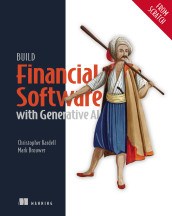
Build Financial Software with Generative AI (From Scratch)
A minimum viable product is an initial product version that delivers enough core functionality to release to customers and gather feedback.
- How it is used
- Uses an integrated ACH dashboard to release customer-facing functionality and learn which improvements matter next.
- How deep it goes
- Explains MVP purpose, scope, integration, testing, and iterative rework, without expanding substantially into later product enhancements.
- Examples
- Demonstrates an ACH dashboard that uploads and parses files, stores results, visualizes data, transforms API responses, and tests user flows.
- What you can do after
- Build it from scratch by integrating an ACH parser, FastAPI APIs, Postgres storage, a Next.js interface, and Playwright validation.

Effective Platform Engineering
A minimal viable product is the smallest version of a product that can be delivered to validate its value and assumptions with users.
- How it is used
- Uses the smallest valuable platform capability to test assumptions, learn from early adopters, and guide subsequent delivery.
- How deep it goes
- Explains staged value delivery, feedback loops, and feature evolution, but stops short of prescribing a universal feature-selection method.
- Examples
- Uses staged transport capabilities and deployment automation that expands from basic tasks to testing and rollback.
- What you can do after
- Build it from scratch by automating a basic platform workflow, collecting feedback, and extending capabilities through short iterations.
Read how Effective Platform Engineering explains minimum viable product →

Machine Learning System Design
The smallest product version that delivers enough functionality to test or serve a core use case.
- How it is used
- Tests an ML product hypothesis and validates system components before complexity or broader investment.
- How deep it goes
- Defines goals and smoke-test behavior, but stops short of specifying a particular model, feature set, or implementation.
- Examples
- Uses a simple predictor that produces the required format as a smoke test for an ML system.
- What you can do after
- Evaluate a product hypothesis, collect early feedback, and verify that system components work before building complexity.
Read how Machine Learning System Design explains minimum viable product →

Functional Design and Architecture: Examples in Haskell
A minimum viable product is a usable product version with sufficient functionality to validate the product idea and support further development.
- How it is used
- Uses a limited but integrated application to verify a product idea early and guide continued development.
- How deep it goes
- Explains purpose, workflow, integration, architecture, and scope boundaries, but stops short of detailed implementation requirements.
- Examples
- Demonstrates a spaceship-control draft paired with a simulator for reliability testing before launch.
- What you can do after
- Build an early integrated application that verifies an idea and supports further architectural development.
Read how Functional Design and Architecture: Examples in Haskell explains minimum viable product →
The AI Pocket Book
A minimal product version intended to learn about customers with the least necessary implementation.
- How it is used
- Uses an early, limited product to validate customer needs before committing to a larger solution.
- How deep it goes
- Defines the learning purpose and prototype form, but does not specify implementation techniques or detailed validation procedures.
- Examples
- Uses prototypes, mock-ups, self-driving-car startups, and AI-based product requests as concrete examples and warnings.
- What you can do after
- Apply it by testing customer needs early and deciding whether a proposed AI solution addresses a real commercial problem.
Read how The AI Pocket Book explains minimum viable product →
Also covered in
- Shipping Go: Develop, deliver, discuss, design, and go again
- Software Design for Python Programmers
- Design for Developers
- Object-Oriented Software Design in C++
- The Well-Grounded Data Analyst
- AI Model EvaluationIn early access (MEAP)
- Human-in-the-Loop Machine Learning: Active learning and annotation for human-centered AI
- Writing for Developers: Blogs that get read
- Learn Go with Pocket-Sized Projects
What to know first
- feedbackFeedback is information or evaluation about an action, system, or outcome that can inform assessment or subsequent decisions and behavior.
- startupA startup is a newly established company developing a product, service, or business model while pursuing growth under substantial uncertainty.
- authenticationAuthentication is the process of verifying the claimed identity of a user, service, device, or other entity.
- business modelA business model is the structure by which an organization creates, delivers, and captures value through its activities.
Related concepts
- feedbackuses · Feedback is information or evaluation about an action, system, or outcome that can inform assessment or subsequent decisions and behavior.
- baselineequivalent to · A baseline is a reference model, result, measurement, or level used to compare performance or assess change.
- database designhas part · Database design is the process of defining a database’s structures, relationships, constraints, and organization to meet data requirements.
- draftequivalent to · A draft is a preliminary version of content that is subject to revision or finalization.
- integration testuses · An integration test evaluates whether multiple software components, or a component and an external dependency, interact and behave correctly together.
Questions about minimum viable product
What is minimum viable product?
A minimum viable product is an early product version with enough functionality to deliver core value and test assumptions with users.
Which Manning books explain minimum viable product?
Think Like a Software Engineering Manager, Investing for Programmers, Tech Startup Toolkit, Claude at Work, The Art of AI Product Development, Build Financial Software with Generative AI (From Scratch), Effective Platform Engineering, Machine Learning System Design and 2 more.
What should I know before learning minimum viable product?
Manning books that teach minimum viable product usually introduce feedback, startup, authentication and business model first.
What are the parts of minimum viable product?
Minimum viable product includes ach parsing and database design.
What is minimum viable product also called?
Minimum viable product is also called MVP or minimal viable product.
These guides are generated from the text of Manning books by Manning's knowledge graph and link to the sections they draw on. The full books are available on liveBook and at manning.com.