Load balancing distributes requests across available compute resources so generative AI applications can scale, remain available, and maintain performance as demand changes. section 11.2 section 11.5.1
Production deployments typically combine load balancing with:
- Auto-scaling, which adjusts computing capacity dynamically during traffic spikes. section 11.5.1
- Redundancy across instances or regions to keep services available when components fail. section 10.2.2 section 10.5.1
- Monitoring, alerting, error handling, and recovery mechanisms to detect bottlenecks and minimize downtime. section 10.2.2 section 10.3.1
- API gateways, queues, and stream processing when multiple endpoints or asynchronous workloads must be managed. section 10.5.1
In model ensembles, load balancing distributes traffic among model deployments while routing logic selects models and redundancy protects against regional or endpoint failures. section 10.5.1
Handling an enterprise traffic spike
An enterprise GenAI service can distribute incoming requests across its infrastructure, increase capacity automatically as demand rises, and monitor latency, throughput, errors, and cost. Caching frequent responses and reducing unnecessary tokens further lowers computational load. section 11.5.1 section 10.2.2
Figure 10.3 Generative AI architecture principles
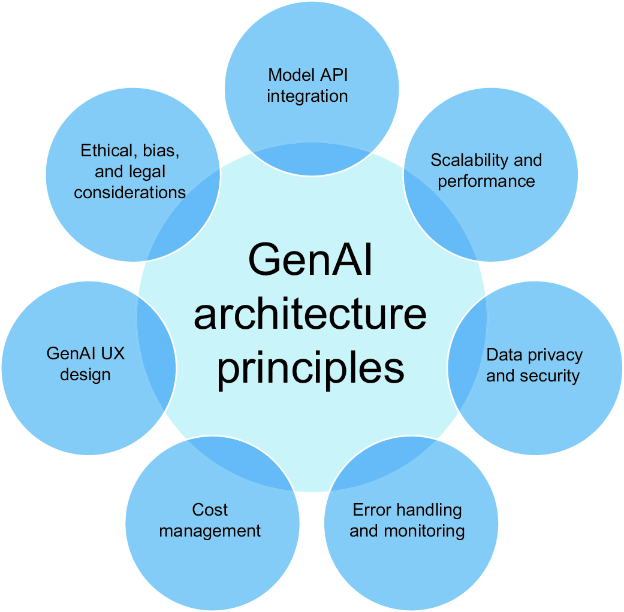
Use the architecture overview to relate load balancing to auto-scaling, security, monitoring, orchestration, and other production principles. section 10.2.2













