A local optimum is a candidate that scores higher than every one-step neighbor, even though a better candidate exists farther away. A greedy search stops there because reaching the better candidate requires a downhill move first. section 4.1.3 section 3.6
Keeping a population of candidates spread across the search landscape can help: some may already be in the valley between peaks, where climbing toward a taller peak is possible. A population is not a guarantee; it can still wander without finding a better candidate. section 4.1.3
Figure 4.3 A local optimum, and the population that escapes it. A single greedy climber (solid) reaches the near peak and stops, since the only way onward is down. A scattered population (hollow) keeps members out in the valley, and one of them crosses to the taller peak; the whole argument of this chapter is in that single crossing.
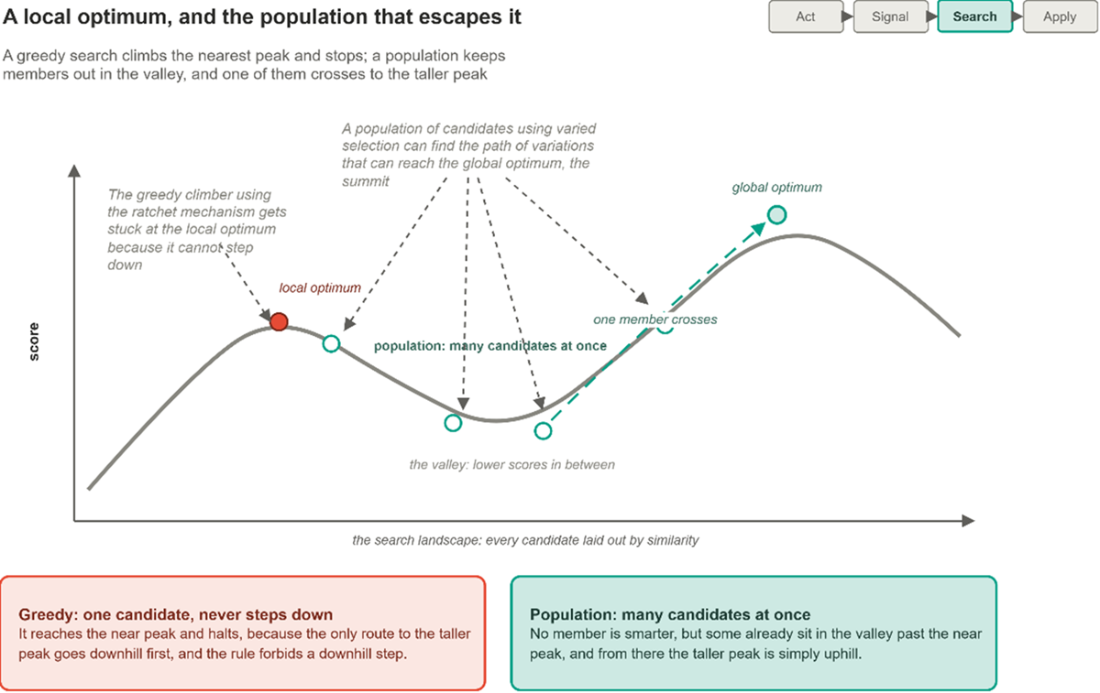
Compare a greedy climber that halts on the near peak with a scattered population that can cross the valley. section 4.1.3