Max pooling compresses many convolution outputs into one value: the largest activation in the region. In a text CNN, that peak acts as evidence that a learned word pattern appeared somewhere in the sequence. section 7.2.1 section 7.5.2
Think of convolution as a stencil moving across data and producing a numerical response at each position. Max pooling keeps the strongest response, so a pattern can be detected without preserving every location where it appeared. This trades positional detail for a compact signal. section 7.2.1 section 7.2.7
Max pooling is useful because it:
- Aggregates a large tensor into fewer values, reducing the amount of information passed onward. section 7.5.2
- Measures whether a filter found a strong match somewhere in the input rather than preserving every response. section 7.2.1
- Differs from mean pooling, which averages values and may better represent patterns distributed across several locations. section 7.2.1 section 7.5.2
Detecting a phrase pattern
A text CNN applies a learned kernel across an ordered word sequence. If one position produces a particularly strong activation, max pooling selects that value as the sequence-level signal that the kernel's pattern was present. section 7.2.1
Figure 7.1 A real-life stencil
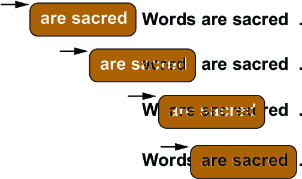
Use the stencil figure to visualize a kernel moving across input and producing position-dependent responses before pooling selects the strongest one. section 7.2.1









