A mental model is an individual’s internal representation of how a domain, business process, or software system works. Dialogue can build one, but visualization makes it explicit and easier to compare. section 2.1.2
Visualizing mental models helps compensate for limited memory and exposes misunderstandings that shared words can conceal. Collaborative modeling uses these models to build a shared understanding among stakeholders and software teams. section 2.1.2 section 1.2.1
Test and refine a mental model by:
- Observing group behavior, beliefs, worries, conflicts, and recurring patterns instead of treating assumptions as conclusions. section 4.3.3
- Posing a sensemaking question that makes an uncertain or conflicting belief explicit. section 4.3.3
- Adding data from the group to make the model more complete and accurate, without reducing the discussion to right or wrong. section 4.3.3
BigScreen’s product polarity
During an EventStorming session, discussion repeatedly returned to an unspoken question: “Do we build a standard product or custom-made solutions?” Participants placed dots between the two poles, making the conflict visible and actionable. section 4.3.3
Figure 2.1 Visualization of the conversation with the business stakeholders at BigScreen on extending movies using EventStorming. domain events are business-relevant events that happen in a conversation. We’ll go more in-depth on how EventStorming works later in the chapter.
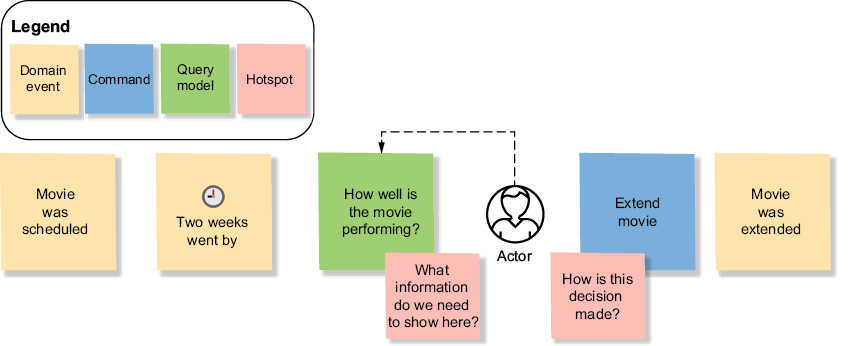
Use the EventStorming visualization to see how conversation turns domain events and stakeholder knowledge into an explicit model. section 2.1.2
Figure 4.9 Sensemaking exercise example on what product we’re actually building
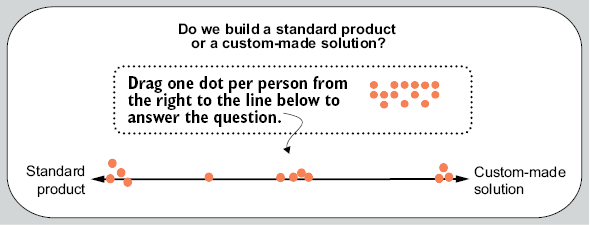
Use the polarity exercise as a compact way to surface competing beliefs that influence software delivery decisions. section 4.3.3





