A computer network is a group of connected devices that exchange information and share resources. A phone, printer, laptop, and server can all be part of one. A home network may connect a few devices; a corporate network may span many buildings. The internet links smaller networks on a global scale. For an organization, this connectivity supports communication and work—but also creates paths that must be protected. section 11.1 section 11.0
Think of sending a message through a network like sending a letter. Endpoints—the devices that send or receive messages—are like homes and offices. Connection links are like roads; network devices help move messages along. Communication protocols provide shared rules so different devices can understand one another. Addresses distinguish destinations, helping information reach the intended device or service. section 11.3 section 11.1
Figure 11.2 The main components of networks
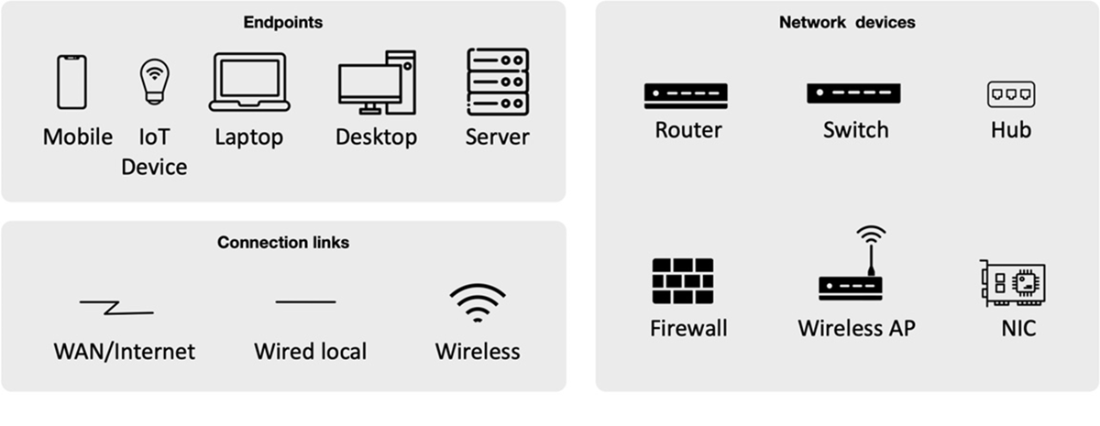
The diagram shows the three basic pieces to look for: endpoints, network devices, and the links between them. section 11.3
Networks can be described by their reach, their connections, and how they direct communication:
- A local area network (LAN) covers a small area; a metropolitan area network (MAN) connects multiple LANs; a wide area network (WAN) spans larger areas. section 11.10
- Wired connections use cabling. Wireless connections carry data by radio; examples include Wi-Fi, cellular networks, and satellite links. section 11.4.2
- MAC and IP addresses identify devices in different ways, while logical ports help direct traffic to a service or application on a device. section 11.10
Why one compromised device matters
Suppose an attacker gains access to an employee’s device through a weak password. That device may become a starting point for reaching other systems or intercepting traffic. Network segmentation limits which systems can reach one another; firewalls and other layered controls add protection. Wireless access needs particular care because its radio signals can extend beyond a building. section 12.0 section 11.10 section 12.7 section 3.3




