Network bandwidth measures how much data a system or communication channel transfers over time, typically in bytes per second. In Kafka, it describes achievable throughput, but maximum bandwidth does not guarantee low end-to-end latency. section 6.0
A fast transport can still be a poor user experience
A truck loaded with microSD cards has enormous theoretical bandwidth because it carries vast storage capacity. That does not make it suitable for applications where users expect immediate responses: latency may matter more than peak throughput. section 6.0
Kafka performance tuning can increase bandwidth through several interacting controls:
- Distribute load with partitions and consumer groups, while balancing higher client memory use, operational complexity, and possible ordering changes after repartitioning. section 6.5
- Increase producer throughput with batching through batch.size and linger.ms, accepting that larger or delayed batches can increase latency. section 6.5
- Compress producer batches to reduce required bandwidth, while recognizing that compression can increase latency and consumers perform decompression. section 6.5
- Tune consumer fetching with fetch.max.wait.ms and fetch.min.bytes; producer acknowledgments and idempotence can reduce producer performance. section 6.5
Figure 6.1 We can configure performance in Kafka in many places: in the topic configuration, the brokers, and all clients.
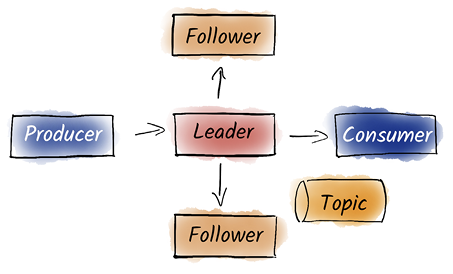
Use the configuration map to locate bandwidth controls across Kafka topics, brokers, producers, and consumers. section 6.0



