liveBook · Manning

Network switch

As explained in Fundamentals of Cybersecurity

A network switch is a device that selectively forwards data frames between connected devices, typically using link-layer addresses.

A network switch tries to forward a message to the device with the correct address. If it cannot find that device, it passes the message to the internal router, which directs traffic onward. section 11.2

Figure 11.1 Illustration of a request from the network of a small company traveling through the internet to the server located in the “Big company”.
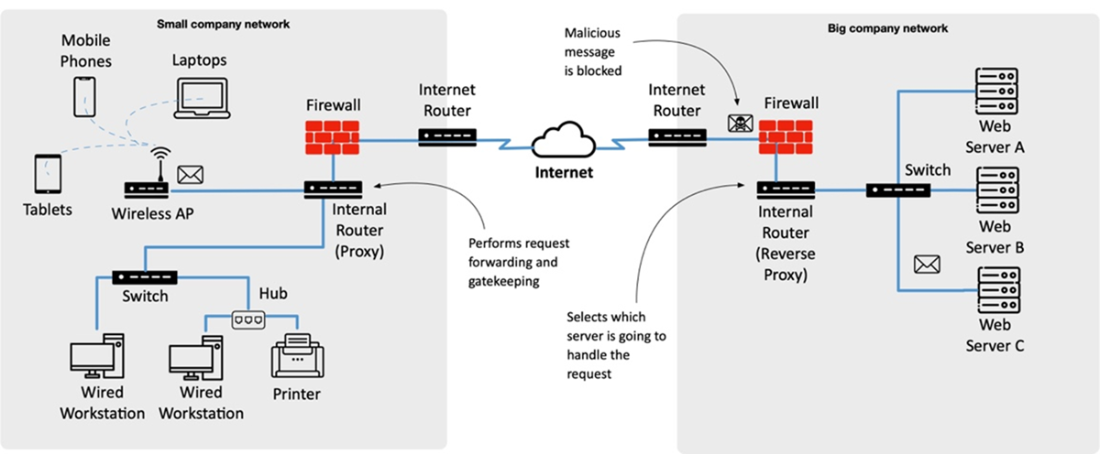
Trace a request from a small company network toward a remote server and see where the switch fits in the journey. section 11.2


How Fundamentals of Cybersecurity covers it

How deep it goes
Explains address-directed forwarding and handoff to a router, but stops short of switching internals.
Examples
Traces a browser request from a small company network toward a remote server.
What you can do after
Understand how a switch forwards a message and hands it to a router when the target is not found.
How it connects
Connects switches with routers, wireless access points, firewalls, and IP addressing in a network request path.

Also explained in

Compare how 2 books explain network switch →

Related concepts

This explainer was generated by Manning's knowledge graph from the text of Fundamentals of Cybersecurity. The section links point to the parts of the book it draws on.