NoSQL is a specialized alternative to relational databases, not a universal upgrade. Choose it by weighing the data model and workload against the tradeoffs; the database landscape also includes vector databases for semantic meaning. section 8.1 section 8.2
Use concrete workload questions to test database fit:
- A financial ledger is a poor fit for a NoSQL document store when strict ACID transactions are required. section 8.8.2
- SQL-hosted session data is flagged as a CPU bottleneck, prompting a review of its storage choice. section 8.8.2
- A read-heavy product catalog with varying fields—shirt sizes or laptop specifications—tests how well a database handles variable structure. section 8.8.3
Figure 8.1 The Database Landscape: You must choose between Strict Order (SQL), Massive Scale (NoSQL), or Semantic Meaning (Vector).
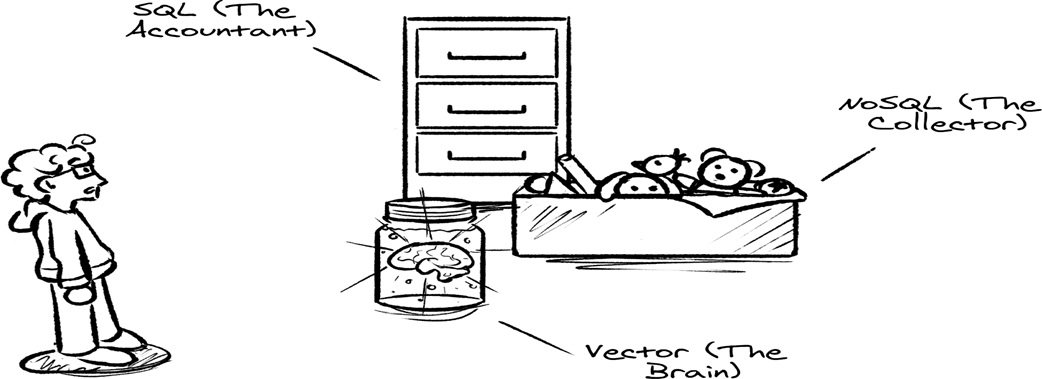
Use the landscape diagram to compare the roles assigned to SQL, NoSQL, and vector databases. section 8.2