A one-to-many relationship connects one record on one side with multiple records on the other. For example, each order belongs to one customer, while one customer may place several orders. section 8.1.2
Store customers separately and replace repeated customer names in orders with CustomerID. If an order contains several items, store those items separately as well; each order can then relate to multiple item records. section 8.1.2
Customer orders and order items
A customer table can identify each customer once, an orders table can assign each order to one CustomerID, and an order-items table can list the products within each order. This avoids repeating customer information and helps provide unique keys for orders. section 8.1.2
Figure 8.6 Our hypothetical orders table with a CustomerID column to reference names in the customer table
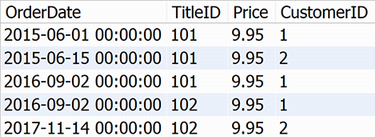
Inspect the hypothetical orders table to see how repeated customer names become a single CustomerID reference. section 8.1.2











