Phishing is a social engineering attack that poses as a trusted person or organization to obtain sensitive information. A fraudulent email may direct someone to a fake Web site that collects login credentials, financial details, or personal data. Stolen credentials can open the way to data theft or further attacks. section 12.3.4 section 12.13
Before acting on an email, check for warning signs:
- A sender name or address with a slight misspelling or suspicious domain. section 12.3.4
- A link whose actual destination differs from what you expect, or an unexpected attachment asking you to enable macros. section 12.3.4
- Urgent requests, threats, poor grammar, or requests for sensitive information or unusual actions. section 12.3.4
A familiar name is not proof
A message claiming to be from a bank or a colleague may try to send its recipient to a fake Web site. The claimed identity is part of the deception; check the sender and link rather than relying on the name alone. A fraudulent request sent by text message is called smishing. section 12.3.4 section 17.7
Figure 12.5 Illustration of Phishing email indicators
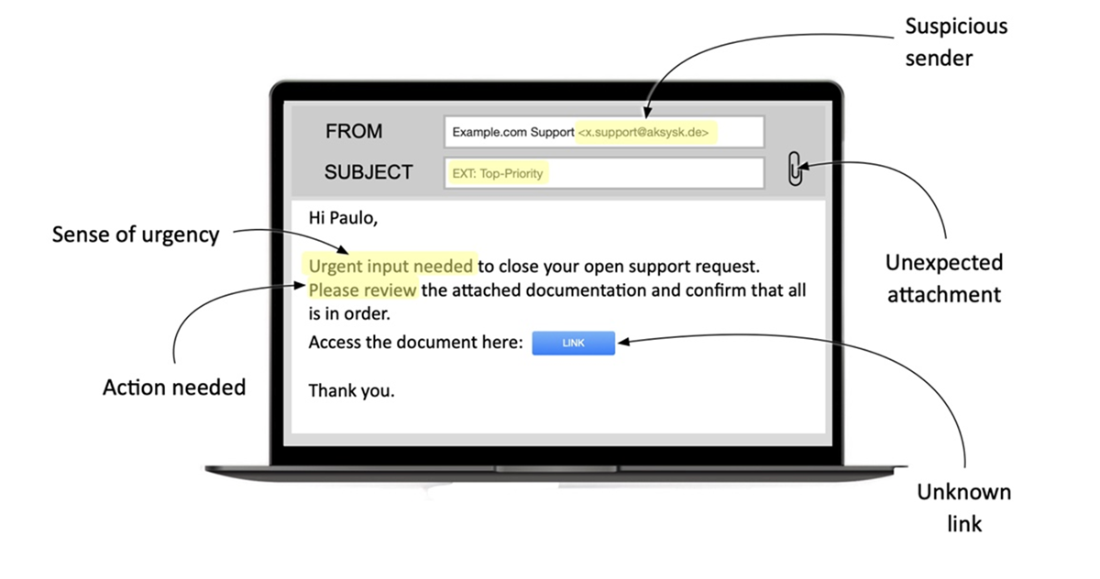
Use the email illustration to locate the sender, links, attachments, and message wording that deserve a closer look. section 12.3.4
Recognizing and reporting suspected phishing is a security awareness practice. A phishing email is a threat vector—a way an attack reaches someone—not the threat actor responsible for sending it. section 17.7 section 1.7






