Privacy by design makes privacy a starting condition for systems, products, campaigns, and data practices—not a repair applied after launch. It treats trust as a strategic outcome: personalization should support meaningful relationships without becoming invasive. section 1.5.2 section 2.2
A practical privacy-by-design approach asks teams to:
- Question the need for each data element before collection and consider whether the goal can be achieved with less data. section 2.2
- Coordinate product, engineering, leadership, legal, IT, security, HR, and marketing rather than assigning privacy to one department. section 1.5.2 section 2.2
- Use consent management platforms, fine-grained access controls, encryption, audits, and incident response plans to make protection operational. section 1.5.2 section 2.2
- Set roles, measurable goals, and privacy champions so regulatory compliance becomes part of organizational practice. section 2.2
A pre-collection design review
Before collecting first-party data, a cross-functional team asks: Do we really need this information? Could we achieve the goal with less data? How can we reduce risk? The answers shape more transparent, controlled, and trust-preserving choices. section 2.2
Figure 2.1 Core elements of user privacy
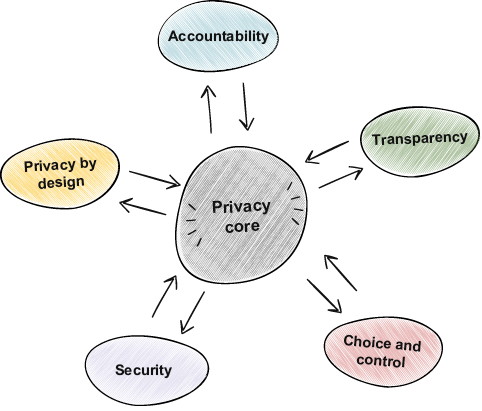
Use the core-elements figure to connect privacy, security, control, and organizational responsibility. section 2.2


