Privacy by design embeds privacy protections into an AI system’s architecture and operation from the outset. B2C products prioritize personal-data protection, while B2B deployments also protect intellectual property, trade secrets, and data sovereignty. section 11.2
Apply privacy by design through principles that anticipate exposure rather than repair it afterward:
- Assess privacy risks early with privacy impact assessments before deployment, addressing data leaks and unintended access. section 11.2.2
- Make privacy the default by anonymizing or redacting personally identifiable information and proprietary metrics without requiring user action. section 11.2.2
- Embed controls into the architecture through anonymized training and evaluation data, data minimization, and, where suitable, federated learning. section 11.2.2
- Preserve functionality and performance so privacy strengthens the system rather than forcing a zero-sum trade-off. section 11.2.2
Recommendation system
Before generating recommendations, anonymize or redact sensitive data by default. Offer transparent choices when including additional data could create more value, and expose only the information needed for each recommendation. section 11.2.2
Figure 11.6 The seven principles of privacy-by-design
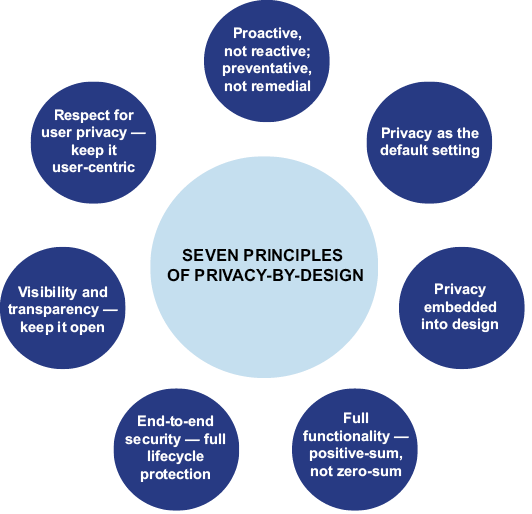
Use the figure to review the seven privacy-by-design principles as a complete checklist. section 11.2.2


