Code refactoring restructures existing source code without changing externally observable behavior. A practical refactoring separates handlers, database access, models, routes, errors, scripts, and application state into focused Rust modules. section 6.1
A safe structural refactoring involves:
- Creating module files and grouping related code under folders such as handlers and dbaccess. section 6.1
- Moving health_check_handler into general.rs and updating module declarations and import paths. section 6.1
- Running cargo check, then cargo test, and revisiting the changed steps if errors appear. section 6.1
Restructuring a Rust web project
Move the health-check handler from course.rs to general.rs, declare the new module, adjust imports across the binary, database access, handlers, and routes, then verify the result with cargo check and cargo test. section 6.1
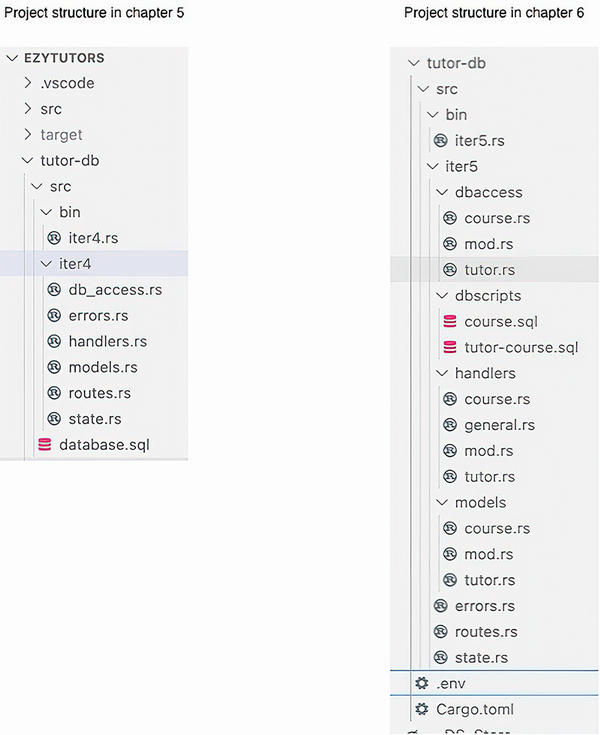
Use the project-structure figure to inspect how related Rust files are grouped after refactoring. section 6.1





















