REST is an architectural style for interprocess communication, usually over HTTP. Its constraints emphasize scalable interactions, general interfaces, independent deployment, and intermediaries. APIs model business objects or collections as resources identified by URLs. section 8.2.2
Clients manipulate resources using HTTP verbs:
- GET retrieves a resource representation, often JSON or XML. section 8.2.2
- POST creates a resource; PUT updates one. section 8.2.2
Order service
POST /orders creates an Order; GET /orders/{orderId} retrieves one. An HTTP-based API is not necessarily RESTful: a maturity model distinguishes services that use a single action endpoint from those that support resources. section 8.2.2
Figure 8.5 An OpenAPI document describes a REST APIs endpoints including URL paths, HTTP methods, request and response bodies, and so on.
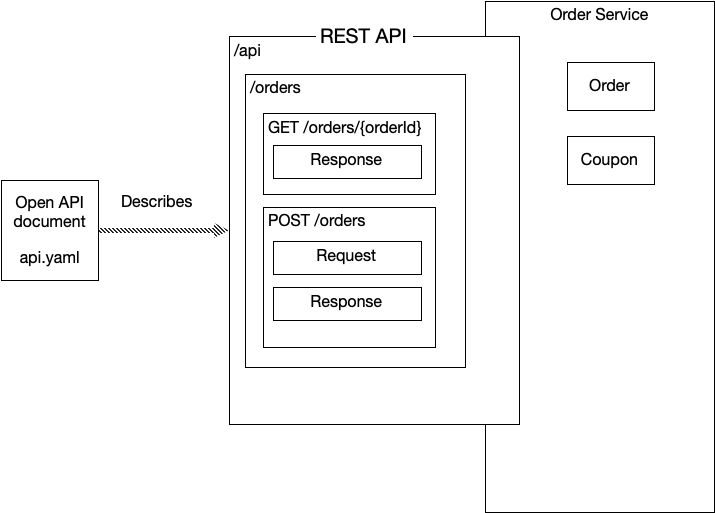
An OpenAPI document can describe endpoint paths, HTTP methods, and request and response bodies. section 8.2.2