Rule-based systems represent knowledge with symbols and explicit rules, then manipulate those symbols computationally. They can apply rules without directly engaging with the environments the symbols describe—a limitation highlighted by critiques that connect intelligence to perception and experience. section 1.5.2 section 1.7
Rule-based approaches aimed to replicate human thought but struggled with ambiguity, contradiction, and incomplete information. Their apparent resemblance to instruction-following in generative systems can be misleading: those systems are trained on patterns rather than procedures. section 1.7 section 6.3
Figure 1.7 Grounded understanding and symbolic AI. In Dreyfus’s account, human intelligence emerges through interaction with the real world, where perception and experience shape understanding. Symbolic AI systems instead operate on rules and representations extracted from human knowledge and encoded into machines, allowing them to manipulate symbols without direct engagement with the environments those symbols describe.
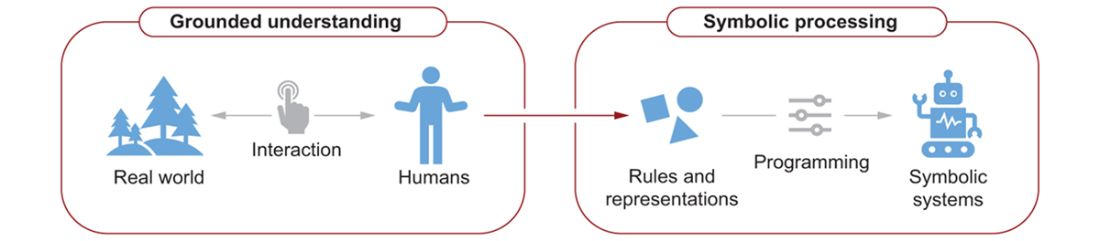
Contrasts rule-based symbol manipulation with intelligence grounded in perception and experience. section 1.5.2









