Scalability is a system’s ability to absorb rising data volume or user demand while preserving acceptable performance through predictable, manageable expansion. In a lakehouse, it is an architectural and operational concern: growth should not require major reconfiguration, downtime, constant tuning, or disproportionate labor. section 5.1.4 section 7.2.1
Evaluate scalability through the system’s likely workload and operating model:
- Test rapid data growth, seasonal workloads, real-time analytics, frequent schema changes, and increasing user demand. section 5.1.4
- Measure request rates, response latency, concurrent writes, namespace expansion, and metadata resolution for catalogs. section 7.2.1
- Prefer predictable scaling, automation, observability, self-service, standard APIs, and protocols that limit custom integration and lock-in. section 5.1.4
Catalog growth scenario
A multi-tenant lakehouse with thousands of Iceberg tables and dozens or hundreds of concurrent users needs a catalog that sustains high metadata request volumes, concurrent writes, and low-latency snapshot resolution without becoming a bottleneck. section 7.2.1
Figure 5.4 Factors to consider when estimating the storage system’s cost
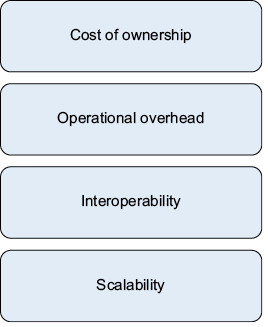
Use the cost factors diagram to compare scaling effort, provisioning complexity, downtime risk, and labor implications. section 5.1.4


























