Self-service lets application teams request, create, or modify infrastructure resources without requiring infrastructure teams to perform every change. Module ownership remains distributed, while release controls protect availability and security. section 5.4
A workable self-service flow combines:
- An application team edits a shared infrastructure module and submits the change through the build system. section 5.4
- Module approvers review the change before releasing a new version. section 5.4
- Subject-matter experts provide additional review when the change could disrupt data or availability. section 5.4
- Established module standards and development processes keep flexibility from becoming delivery friction. section 5.4
Database module upgrade
The Beans team updates a database module for PostgreSQL 12. Review reveals that the upgrade would delete the existing database and create an empty one. Database administrators recommend migration practices, the team revises the module, and approvers conduct a second review before release. section 5.4
Figure 5.14 For disruptive module updates, the application team submits a ticket to the database team to verify database migration steps before releasing a new module version.
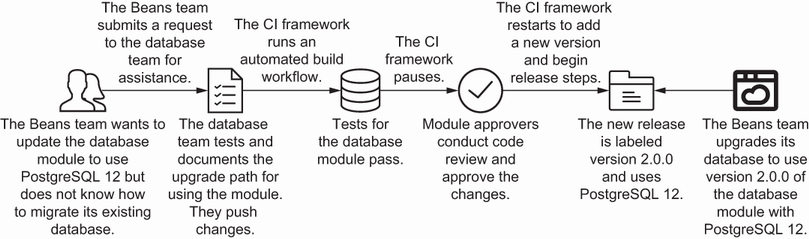
Trace the review path for disruptive module updates, including database-team verification of migration steps. section 5.4





