liveBook · Manning

Self-service

As explained in Platform Engineering on Kubernetes

A self-service capability lets development teams provision, configure, or operate platform resources without direct intervention from platform engineers.

Self-service lets development teams consume platform capabilities without waiting for platform engineers to perform every provisioning, configuration, or operational task. Platform teams assemble cloud services and internal practices, then hide those decisions behind interfaces that teams can use directly. section 1.3.1 section 9.5

Effective self-service depends on platform choices that are useful to teams and maintainable by platform engineers:

  • Expose platform APIs that encapsulate decisions about cloud services, compliance requirements, tooling, and operational workflows. section 1.3.1 section 9.5
  • Prioritize capabilities according to what different teams need, rather than treating self-service as a fixed product feature. section 9.5
  • Choose reusable tools where they fit, while retaining flexibility when existing workflows, practices, or compliance requirements demand adaptation. section 1.3.1 section 9.5
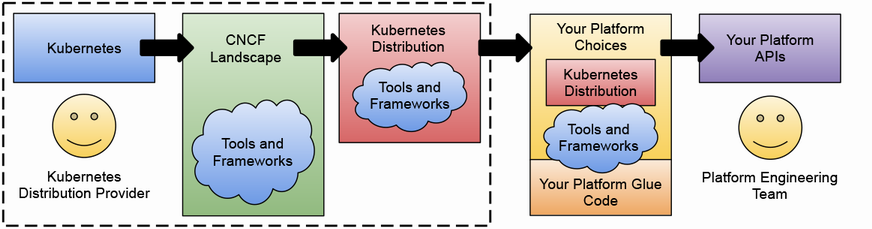
Figure 1.15 Building platforms on top of Kubernetes distributions

Use the platform-building overview to compare how Kubernetes distributions shape the path toward self-service capabilities. section 1.3.1


How Platform Engineering on Kubernetes covers it

How deep it goes
Defines self-service through platform APIs and team capabilities, but stops short of prescribing a single implementation.
Examples
Points to OpenShift and Tanzu as opinionated Kubernetes-based tools that can support out-of-the-box workflows.
What it assumes
Assumes platform teams can identify team needs and maintain platform APIs as tools and organizational decisions evolve.
What you can do after
Apply it via platform APIs to consume platform capabilities while reducing direct platform-engineer intervention.
How it connects
Connects self-service to platform APIs, platform engineering, Kubernetes, CI/CD, GitOps, and infrastructure provisioning.

Also explained in

Compare how 6 books explain self-service →

Related concepts

This explainer was generated by Manning's knowledge graph from the text of Platform Engineering on Kubernetes. The section links point to the parts of the book it draws on.



