Serialization converts an in-memory data structure into a structured representation for transmission or storage. In a Rust web server, an HttpResponse becomes a well-formed HTTP message that a browser or other client can understand. section 2.3.2
An HttpResponse stores the protocol version, status code, status text, optional headers, and optional body. Implementing From<HttpResponse> for String assembles these fields with HTTP line breaks, headers, Content-Length, and body content. section 2.3.2
A practical serialization path is:
- Construct an HttpResponse with defaults or an explicit status, headers, and body. section 2.3.2
- Convert the response into a String using its version, status, headers, content length, and body. section 2.3.2
- Write the serialized string to a stream with send_response(). section 2.3.2
- Use serde and serde_json when handlers load JSON data into Rust structures or return JSON through an API route. section 2.3.4
Serialized 404 response
A response with HTTP/1.1, status 404, Content-Type text/html, and the body “Item was shipped on 21st Dec 2020” becomes an HTTP string containing “HTTP/1.1 404 Not Found”, Content-Length: 33, blank-line separation, and the body. A unit test compares this exact result with the expected message. section 2.3.2
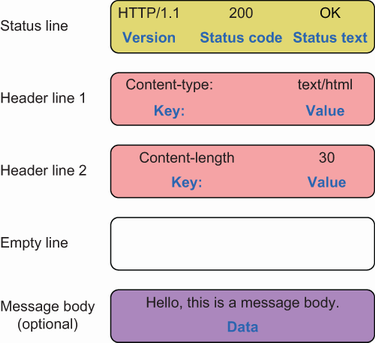
Use the HTTP response structure to trace how serialized status, headers, and body fields map onto the wire-format message. section 2.3.2























